Isaiminia World Breaking News & Top Stories
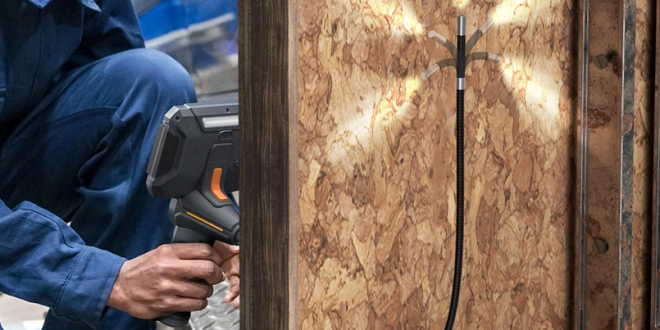
You’re lying on your back under the car, flashlight clenched between your teeth, trying to spot the source of that mysterious oil leak somewhere deep in the engine bay. Or maybe you’re staring at a wall, knowing a pipe behind it is leaking but dreading the thought of cutting through drywall just to confirm your suspicion. These frustrating moments are all too familiar for DIY enthusiasts who tackle their own repairs. Traditional inspection methods—mirrors on sticks, smartphone cameras taped to coat hangers—rarely deliver the answers you need. Enter the articulating borescope, a revolutionary tool that’s fundamentally changing how homeowners and weekend mechanics approach hidden inspections. These compact devices feature flexible, steerable camera probes that navigate through tight bends, narrow openings, and curved passages while delivering crystal-clear HD video to your screen. But what exactly makes articulating borescopes so transformative for DIY work? This article explores their unique benefits, practical applications in car repair and home maintenance, and how to choose and use one effectively for your projects.
What Are Articulating Borescopes and How Do They Work?
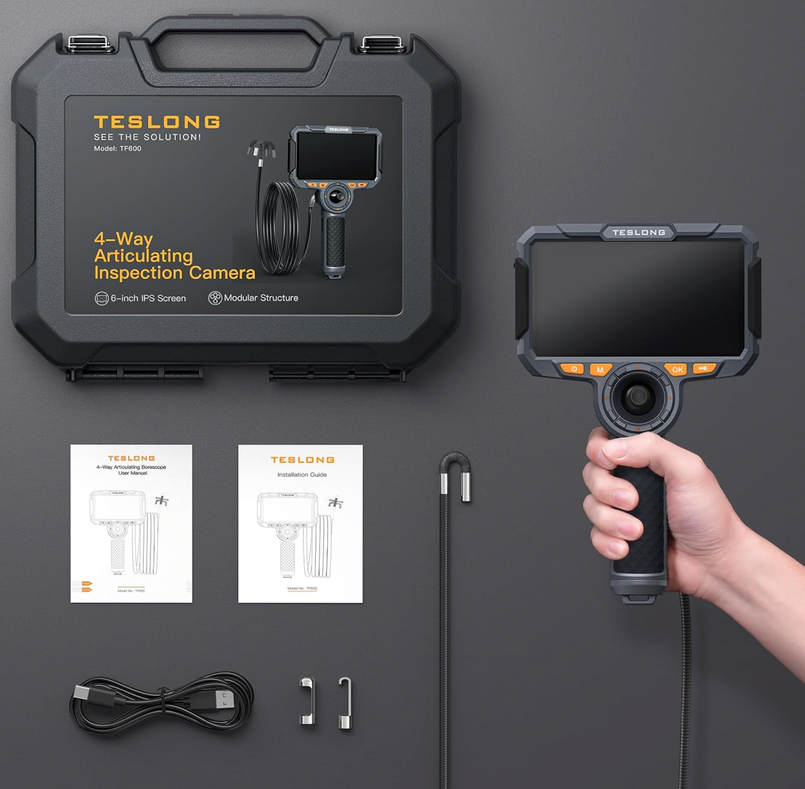
An articulating bore scope is a flexible inspection camera with a remotely controllable tip that bends in multiple directions, allowing you to steer the lens precisely where you need to look. Unlike rigid borescopes, which can only travel in straight lines, articulating models navigate around corners, through S-curves, and past obstructions—making them ideal for complex internal pathways found in engines, plumbing, and wall cavities. The device consists of four main components: a semi-rigid yet flexible probe housing the articulation mechanism, a miniature HD camera at the tip, adjustable LED lights for illuminating dark spaces, and a display screen or smartphone connection for real-time viewing. Operation is straightforward—you insert the probe into an opening, use a joystick or thumb control to articulate the camera tip toward your target area, and watch the live feed on your screen. The LED brightness adjusts to eliminate shadows, giving you a clear view of whatever surface or component you’re inspecting without disassembly.
Key Benefits of Articulating Borescopes for DIY Enthusiasts
The most compelling advantage of an articulating borescope is its ability to reach areas that would otherwise require expensive disassembly or professional intervention. When your camera tip can bend 180 degrees or more in any direction, suddenly those hidden valve covers, curved drain pipes, and cramped wall cavities become fully visible without tearing anything apart. This translates directly into significant cost savings—a single professional plumbing inspection or automotive diagnostic session can easily cost hundreds of dollars, while owning your own articulating borescope pays for itself after just one or two uses. The HD camera quality on modern units delivers remarkably detailed visuals, allowing you to spot hairline cracks, corrosion buildup, or worn gaskets with confidence rather than guessing at problems you can barely see. These devices are also built to withstand the realities of DIY work, with waterproof probes that handle oily engine compartments and wet pipes equally well, all in a portable package that stores easily in a toolbox. For the homeowner or weekend mechanic who wants professional-level diagnostic capability without the professional price tag, an articulating borescope bridges that gap perfectly—turning uncertain guesswork into informed, targeted repairs that save both time and money.
Practical Applications: From DIY Car Repair to Pipe Inspections
The versatility of articulating borescopes makes them indispensable across a wide range of DIY projects. Whether you’re troubleshooting a mechanical issue under the hood or tracking down a hidden plumbing problem, the ability to visually inspect confined spaces without dismantling anything transforms how you approach diagnostics and repairs.
DIY Car Repair Inspections
For automotive work, an articulating borescope lets you peer directly into engine cylinders through the spark plug holes to check for carbon buildup, scoring, or valve damage—diagnostics that would otherwise require an engine teardown. You can snake the probe through transmission fill ports to inspect gear condition, navigate along brake lines to spot corrosion or micro-cracks, and examine exhaust manifolds for hidden leaks. This visual confirmation prevents costly misdiagnoses, ensuring you replace only what’s actually failed rather than swapping parts based on guesswork.
Home Maintenance and Pipe Inspections
Around the house, these tools excel at navigating drain pipes to locate blockages, tree root intrusions, or joint separations without digging up your yard or cutting into walls. You can thread the probe into HVAC ductwork to check for mold growth or debris accumulation, inspect behind walls for water damage or pest activity through small access holes, and examine chimney flues for creosote buildup. Each of these tasks would traditionally require calling a specialist or performing destructive exploration—the articulating borescope eliminates both.
How to Choose the Right Articulating Borescope for Your Needs
Selecting the right articulating borescope means balancing your budget against the features that matter most for your typical projects. Start with camera resolution—prioritize models offering HD quality at minimum, since blurry footage defeats the entire purpose of visual inspection. You need to clearly distinguish between a hairline crack and a harmless scratch, and lower-resolution cameras simply cannot deliver that level of detail. Next, consider articulation range; a tip that bends at least 180 degrees in two directions gives you the flexibility to navigate most automotive and plumbing scenarios, while four-way articulation provides even greater maneuverability for complex inspections. Probe length and diameter deserve careful thought based on your intended use—automotive spark plug holes and household drains require different dimensions, so measure your most common access points before purchasing. Thinner probes reach tighter spaces but may sacrifice some image quality or durability. For connectivity, decide whether you prefer a built-in screen for standalone operation or a model that pairs with your smartphone or tablet, which often provides a larger viewing area and easier image sharing. Manufacturers like Teslong offer a range of articulating borescopes designed with DIY users in mind, providing various probe diameters and display options to match different inspection needs. Focus your spending on image clarity and articulation quality rather than extras you’ll rarely use, and you’ll find a capable tool that delivers professional-level diagnostics at a fraction of what repeated service calls would cost.
A Step-by-Step Guide to Effective Borescope Inspections
Getting the most from your articulating borescope requires a systematic approach rather than simply jamming the probe into the nearest opening and hoping for the best. Following a consistent process ensures you capture useful diagnostic footage every time.
Begin with pre-inspection preparation. Clean the area around your access point to prevent pushing debris deeper into the space you’re examining—wipe down spark plug holes before removal, flush drain openings with water, or vacuum around wall penetrations. Put on appropriate safety gear including gloves and eye protection, especially when working around automotive fluids or potentially contaminated pipes. Power up your borescope and verify the camera lens is clean and the LEDs function properly.
During insertion and navigation, feed the probe slowly and deliberately. Rush the process and you risk damaging both the probe and the surfaces you’re inspecting. Use the articulation controls in small, incremental movements to guide the tip around bends rather than forcing it through. Keep the camera centered in the passage to maintain orientation and reduce contact with walls or components. When inspecting engine cylinders, rotate the articulation systematically to scan the entire circumference rather than fixating on one spot.
Once you reach your target area, capture HD photos and video for later analysis. Real-time viewing often misses subtle details that become obvious when you review footage on a larger screen at your own pace. Compare what you see against reference images of healthy components—knowing what “normal” looks like makes damage identification far more reliable. Mark timestamps when you spot potential issues so you can return to them quickly.
After each use, wipe the probe with a soft cloth dampened with appropriate cleaner, inspect the articulation mechanism for smooth operation, and store the device with the probe loosely coiled to avoid kinking. Proper post-use care extends the life of your investment significantly and ensures it performs reliably the next time you need it.
Overcoming Common DIY Inspection Challenges
Every DIYer encounters obstacles during inspections, but articulating borescopes address the most frustrating ones directly. Poor visibility in deep cavities is solved by adjusting the built-in LED intensity—dim the lights to reduce glare on reflective metal surfaces, or brighten them fully when navigating dark drain pipes. Tight access points become manageable when you select the appropriate probe diameter beforehand and use gentle articulation to thread past obstructions rather than forcing entry. Interpreting what you see on screen takes practice; spend time studying reference images of healthy components online so you can confidently distinguish normal wear from actual damage. When footage appears disorienting, slow down, pull back slightly, and re-establish your spatial orientation before advancing again. These simple adjustments turn potential frustrations into straightforward solutions.
Empowering DIY Independence With Professional-Level Visual Diagnostics
Articulating borescopes have fundamentally reshaped what’s possible for DIY enthusiasts tackling inspections at home and in the garage. Their steerable camera tips navigate the curved, cramped, and otherwise inaccessible spaces that once demanded professional service calls or destructive exploration. With HD image clarity, you can confidently identify problems—from corroded brake lines to tree root intrusions in drain pipes—without second-guessing what you’re seeing on screen. The affordability of modern units means this professional-grade diagnostic capability pays for itself quickly, eliminating repeated service fees while putting you in control of your own maintenance decisions. Whether you’re performing engine cylinder checks, tracking down elusive plumbing leaks, or inspecting HVAC ductwork for hidden mold, an articulating borescope transforms uncertain guesswork into precise, visual confirmation. For any homeowner or weekend mechanic serious about working smarter rather than harder, this tool deserves a permanent spot in the toolbox. As these devices continue advancing in resolution, probe flexibility, and ease of use, DIY enthusiasts gain ever-greater independence—diagnosing and solving problems that once seemed beyond reach, all from the comfort of their own home.