 Isaiminia World Breaking News & Top Stories
A patio pergola can turn an ordinary outdoor space into a comfortable place to relax, dine, or entertain. However, for renters and homeowners with finished patios, securing a pergola without drilling into concrete, pavers, or decking can be a challenge. Property rules, surface damage, and the difficulty of reversing permanent modifications all need to be considered.
The good news is that several no-drill anchoring methods can help stabilize a patio pergola while preserving the existing outdoor surface. From weighted base plates to planter boxes and approved deck tie-downs, the right approach depends on your pergola’s design, the available space, and local weather conditions. Understanding these options can help you create a practical outdoor retreat without unnecessary alterations.
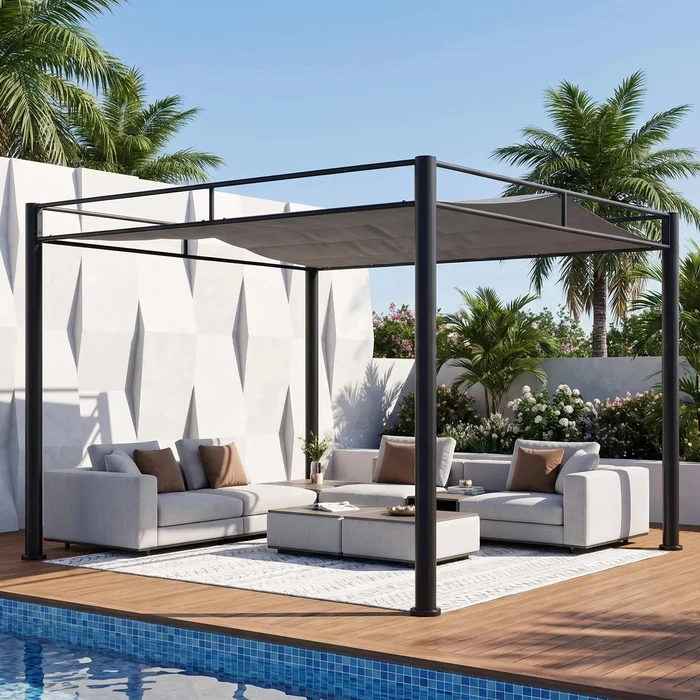
Why Renters Need a No-Drill Pergola Anchoring Solution
Traditional pergola installation often involves fastening posts to a concrete slab or wooden deck. Although these connections can provide structural stability, drilling may not be permitted in rental properties or may damage waterproofing, paving, and finished surfaces.
A no-drill approach can be appealing for balconies, paved patios, and other spaces where permanent changes are undesirable. However, avoiding holes does not automatically make a pergola safe. Wind can place considerable uplift and lateral forces on an outdoor structure, especially when it has a canopy or other solid components.
Before choosing an anchoring method, review your lease, check with your landlord or property manager, and consult the pergola manufacturer’s installation instructions. The goal is to find a compatible stabilization solution rather than simply adding weight wherever it fits.
Using Planter Boxes to Stabilize a Small Pergola
Planter boxes can combine outdoor decoration with a practical anchoring function. For a small pergola, substantial planters positioned around the posts may help increase resistance to movement while adding greenery and defining the seating area.
Choose sturdy, weather-resistant containers with sufficient capacity for the intended ballast. Depending on the design, the planters may contain soil, gravel, or other suitable materials. However, placing a pergola post beside a planter is not the same as securely connecting the two. Any connection must be compatible with the pergola’s structure and designed to transfer the relevant forces safely.
Drainage is another important consideration. Waterlogged containers can damage patio finishes, while oversized planters may obstruct walkways or create excessive loads on balconies and elevated decks. Check the surface’s load capacity before adding heavy materials, and make sure the arrangement does not interfere with doors or emergency access.
For renters who want a natural-looking outdoor setup, planter boxes can be an attractive option when used as part of an appropriate, manufacturer-approved stabilization plan.
Weighted Base Plates: A Flexible Option for Patio Surfaces
Weighted base plates offer another way to approach no-drill pergola anchoring. These bases support the posts and can accommodate additional weight, depending on their design and the pergola manufacturer’s specifications. Some are designed to hold compatible concrete pavers or other approved ballast, making them suitable for certain hard-surface installations.
When considering how to weight down a pergola without drilling a patio, pay attention to the base plate’s dimensions, weight capacity, and compatibility with the frame. The weight must be distributed appropriately across the support points, and the bases should sit flat on a stable surface. Protective pads may help reduce scratches on finished concrete or pavers, provided they do not compromise stability.
Keep in mind that ballast alone may not prevent a pergola from tipping or lifting during strong winds. A weighted base should not be treated as a universal substitute for structural anchoring. Follow the manufacturer’s guidance and take down or secure removable canopy components as directed before severe weather.
Deck Tie-Downs: When Existing Attachment Points Are Available
Deck tie-downs may be an option when a suitable attachment system already exists or when a landlord approves a reversible installation. Depending on the deck construction, compatible clamps or purpose-designed connectors may attach to approved structural members without requiring new holes.
Before choosing this method, confirm that the deck and its supporting structure can handle the additional forces. Attaching a tie-down to a decorative railing, thin trim, or an unsuitable deck board can create a false sense of security. Ordinary straps also should not be assumed to provide adequate protection against wind uplift.
For renters, permission is essential even when a proposed attachment appears removable. If the deck lacks suitable structural connection points, consult a qualified installer about an appropriate alternative rather than improvising a tie-down arrangement.
Choosing the Right Patio Pergola for a Rental Space
Anchoring considerations should influence your pergola choice from the beginning. A compact design may fit a small patio more comfortably, but its actual footprint, height, canopy style, and wind exposure matter as much as its size.
SUNJOY offers patio pergola options in different materials, dimensions, and canopy configurations, allowing shoppers to compare styles for their outdoor spaces. Some models feature adjustable or retractable canopies, which can offer flexibility when managing sunlight. However, canopy features and anchoring requirements vary by model, so review the product specifications and installation instructions before purchasing.
Explore the SUNJOY patio pergola collection to compare available designs and find an option that suits your space. If drilling is prohibited, confirm in advance whether the specific model can be installed safely using an approved alternative anchoring arrangement.
Build a Comfortable Outdoor Space Without Permanent Changes
Creating a welcoming patio does not always require permanent modifications. Planter boxes, weighted base plates, and suitable deck tie-down systems each offer potential solutions, but their effectiveness depends on the pergola design, installation surface, and surrounding conditions.
For renters, the best approach combines careful planning with landlord approval and manufacturer guidance. By evaluating the anchoring requirements before assembling your patio pergola, you can make more informed decisions, protect the property, and create an outdoor space that feels comfortable, functional, and suited to your lifestyle.
