 Isaiminia World Breaking News & Top Stories
Key Takeaways
- A reliable shaft specification considers the environment, mechanical loads, surface finish, dimensions, and maintenance plan together.
- Surface condition affects corrosion performance, seal contact, friction, cleanability, and wear behavior.
- Chlorides, trapped moisture, cleaning chemicals, and carbon-steel contamination can create risks even when the base material is stainless steel.
- Purchase orders should define more than grade and diameter. Tolerance, straightness, finish, length, inspection, and traceability matter.
- Routine cleaning and early inspection help prevent minor surface damage from becoming a service failure.
Stainless steel shafting is often selected for its strength, clean appearance, and corrosion resistance, but material grade alone does not guarantee long service life. A shaft must also suit the actual loading, speed, fit, finish, cleaning method, and exposure conditions of the machine. When comparing commercially finished material, view source for an example of turned, ground, and polished 316/316L stainless shafting.
The most dependable approach is to treat shaft selection as a complete system decision. A component that performs well in a dry indoor actuator may be a poor fit for a washdown conveyor, marine installation, chemical process line, or equipment exposed to abrasive debris.
Why Shaft Selection Requires More Than a Material Grade
Start by identifying what the shaft must do mechanically. Torque, bending load, rotational speed, duty cycle, vibration, shock loading, starts and stops, and reversing motion all influence the required diameter, stiffness, and fatigue resistance. Bearing fits, seals, couplings, keyways, threads, and retaining features can also create local stress concentrations or surface requirements.
Corrosion resistance does not replace sound mechanical design. A shaft that is chemically suitable can still deflect excessively, wear at a seal location, develop fatigue damage near a keyway, or fail because its tolerance does not match the mating components. Conversely, a mechanically strong shaft may have a short life if deposits or harsh cleaning agents attack its surface.
Start With the Working Environment
Document the conditions the shaft will actually encounter, not just the general industry where the equipment operates. Important exposure risks include saltwater or chloride deposits, acidic or alkaline cleaners, humidity, condensation, food or pharmaceutical washdown cycles, outdoor pollution, abrasive dust, and process residue.
General surface discoloration is different from localized corrosion. Pitting corrosion forms small, concentrated cavities that can progress below the surface, particularly where chlorides, stagnant liquid, surface defects, or deposits are present. Crevices under seals, threads, collars, guards, and accumulated residue deserve particular attention because cleaning and drying may be incomplete in those areas.
Match the Shaft to the Load
- List expected torque, bending forces, and any side loading.
- Estimate speed, operating hours, duty cycle, and reversal frequency.
- Identify shock loads, misalignment, vibration, and emergency-stop conditions.
- Review bearing, seal, coupling, keyway, and thread requirements.
- Confirm that the selected diameter provides adequate stiffness as well as strength.
These checks help prevent a common mistake: choosing a shaft solely by nominal diameter and alloy name. Dimensions and fit requirements must reflect the actual assembly, while the finish must suit the mating seal, bearing, guide, or product-contact area.
How Surface Finish Affects Real-World Performance
Surface roughness describes the fine peaks and valleys left by manufacturing. On shafting, those features can influence friction, wear, seal contact, cleaning effort, debris retention, and corrosion behavior. A smoother surface can reduce sites where residue accumulates, but the best finish depends on the application. Extremely fine finishing may add cost without improving a noncritical area, while a seal-running surface may require a more controlled finish than an exposed support section.
Finishing practices also require care. Research on Type 304 stainless steel found that rough grinding in chloride-containing conditions can reduce pitting resistance where grinding scratches intersect manganese sulfide inclusions. The findings show why rough grinding and surface damage should be controlled when corrosion resistance is important.
Turning, Grinding, Polishing, and Passivation
- Turning establishes the basic shape and removes material efficiently.
- Grinding can improve dimensional control and surface consistency when the process avoids excessive damage.
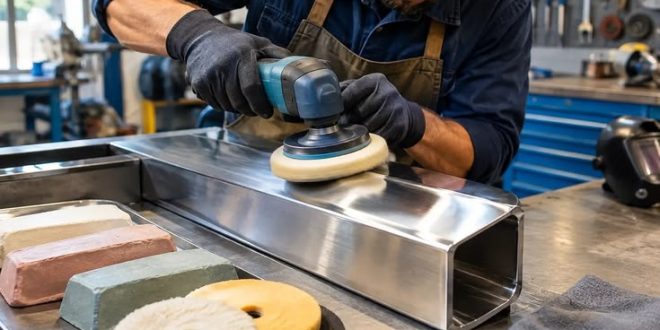
- Polishing reduces visible irregularities and may support easier cleaning in appropriate applications.
- Passivation is commonly used after fabrication or handling to remove free iron contamination and support the protective stainless surface.
Process sequence matters. Deep scratches, overheated areas, embedded particles, transfer from carbon-steel tools, and careless storage can undermine the value of an otherwise suitable alloy. Finished shafts should be protected from impact and separated from materials that can leave iron particles on the surface.
Writing a Better Shaft Specification
A useful drawing or purchase order should clearly state the requirements that affect fit and service life:
- Material grade, condition, and applicable material standard.
- Nominal diameter, diameter tolerance, and required straightness.
- Cut length and allowable length variation.
- Surface roughness requirement or finish description for critical areas.
- End condition, chamfers, deburring, threads, keyways, or other features.
- Inspection requirements, material certification, and traceability expectations.
- Packaging and handling requirements for finished surfaces.
Inspection Checks Before Installation
- Compare material documentation with the purchase order and drawing.
- Measure diameter at multiple locations and confirm critical fits.
- Inspect for dents, burrs, scratches, discoloration, and transit damage.
- Check straightness using the method appropriate to the shaft length and tolerance.
- Confirm the surface is clean and free of visible carbon-steel contamination.
- Test-fit mating bearings, seals, couplings, or guides before final assembly when practical.
Cleaning and Maintenance Practices That Reduce Risk
Remove salt, chemical residue, dust, and process buildup before deposits become difficult to clean. Use products compatible with the installed alloy and process, rinse away cleaner residue where required, and dry areas where standing water can collect. Avoid using brushes, pads, or storage racks that have contacted carbon steel, since transferred iron can rust and stain the stainless surface.
During scheduled maintenance, inspect seal tracks, bearing seats, threads, and exposed sections for scoring, pitting, discoloration, or recurring deposits. Record repeated damage patterns. A recurring mark in the same location may indicate misalignment, vibration, inadequate guarding, trapped moisture, or an unsuitable cleaning practice rather than a defective replacement shaft.
Common Specification Mistakes
- Ordering only by diameter and material name.
- Leaving surface finish and straightness undefined.
- Ignoring chloride exposure, washdown chemicals, or trapped moisture.
- Using a general-purpose tolerance where a bearing or seal fit is critical.
- Failing to protect finished surfaces during transport and storage.
- Assuming stainless steel is corrosion-proof in every service condition.
What Recent Research Suggests About Future Material Choices
Materials research continues to explore stainless steels for demanding hydrogen, chemical, marine, and energy applications. One 2026 research effort reported a nitrogen-based grain-boundary passivation approach that improved corrosion and hydrogen-embrittlement resistance in an experimental austenitic steel compared with commercial 316L. The work on nitrogen passivation at grain boundaries is promising, but it does not replace qualification testing for a specific machine, environment, or manufacturing route.
Conclusion
Reliable stainless steel shafting begins with a complete view of the application. Material grade, mechanical loading, dimensional control, surface finish, cleaning, inspection, and storage all contribute to long-term performance. When those details are specified and maintained together, shafts are better positioned to deliver stable operation, longer service life, and fewer maintenance surprises.