 Isaiminia World Breaking News & Top Stories
Key Takeaways
- Hidden leaks often leave small warning signs before major water damage becomes visible.
- A changing water meter, a higher bill, a musty odor, a warm floor, or a new stain can justify a closer look.
- Homeowners can safely check toilets, exposed connections, appliances, and the water meter before opening walls or floors.
- Leaks below a concrete slab can be difficult to locate without professional testing.
- Quick action can reduce water waste and help protect flooring, drywall, cabinets, and belongings.
Why Hidden Leaks Deserve Quick Attention
A plumbing leak does not always create a puddle beneath a sink. Water can move behind a wall, under finished flooring, through a ceiling cavity, or into the soil below the house before a homeowner notices any damage. For Indianapolis homeowners, paying attention to subtle changes can make a meaningful difference in how quickly a plumbing problem is addressed.
When signs suggest water may be escaping beneath the foundation, arranging slab leak repair in Indianapolis Indiana can help confirm the issue before unnecessary flooring removal or major demolition begins. The goal is not to guess at the source, but to identify it accurately and choose the least disruptive repair path available.
Common Signs of a Hidden Water Leak
One symptom alone does not prove that a concealed pipe is leaking. A higher bill, for example, may result from irrigation, a running toilet, houseguests, or a change in household routines. But several clues appearing together deserve prompt attention.
- An unexplained increase in your water bill: Compare recent usage with the same time of year in prior bills when possible.
- A water meter that keeps moving: If all water use is stopped and the meter still changes, water may be flowing somewhere in the system.
- Sounds of running water: A faint hiss, drip, or rush when the house is quiet can indicate a plumbing issue.
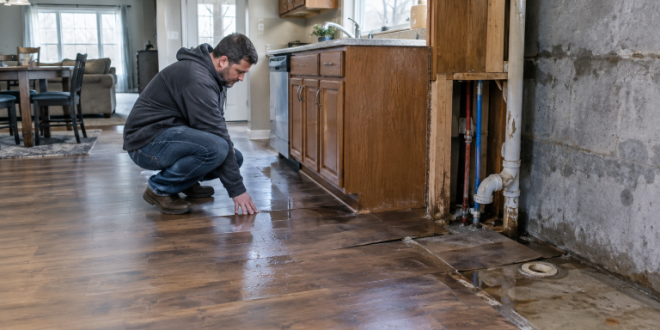
- Damp, soft, cupped, or warped flooring: Moisture below a finished surface can change how a floor looks or feels.
- Musty odors: Persistent damp smells can indicate moisture trapped in materials or enclosed spaces.
- Stains, bubbling paint, or peeling finishes: These often appear after moisture has affected drywall, trim, ceilings, or nearby surfaces.
- Warm spots underfoot: A localized warm area may indicate a leaking hot-water line beneath the floor.
- Unexpectedly wet outdoor areas: A soggy patch away from normal irrigation can indicate a problem with an exterior line.
Small leaks can waste substantial water if left uninterrupted. The EPA’s guidance for checking household leaks recommends comparing meter readings during a period when no water is used and checking common sources such as toilets, faucets, and fittings.
Where Hidden Leaks Commonly Start
Many hidden-leak investigations begin with the most accessible parts of the plumbing system. Toilets, faucet supply connections, shutoff valves, water heaters, washing machine hoses, dishwashers, refrigerator lines, and outdoor spigots can all leak slowly without immediately drawing attention.
Other leaks occur inside walls, below a finished basement floor, beneath landscaping, or under a concrete slab. Pipes below the slab are especially challenging to inspect during a normal walk-through. Water may travel through soil or building materials and appear some distance from the actual leak.
A Simple Water Meter Check
A meter test is a practical first step when you suspect an ongoing leak. It can indicate that water is moving, although it cannot identify the exact source.
- Turn off faucets, showers, washing machines, dishwashers, irrigation, and other water-using equipment.
- Confirm that toilets are not refilling or running.
- Record the meter reading or take a clear photo of the display.
- Wait about two hours without using water.
- Check the meter again. A changed reading may indicate a leak or another source of unplanned water use.
If the meter changes, inspect visible fixtures first. If you cannot find a source, the next step may be to hire a professional leak detector, particularly when flooring, walls, or the foundation area show related warning signs.
Other Safe Checks Homeowners Can Try
- Put a few drops of food coloring in a toilet tank and wait about 10 minutes without flushing. Color appearing in the bowl can indicate a leaking flapper.
- Look beneath sinks for corrosion, damp cabinet bottoms, water marks, or drops around supply valves and drain connections.
- Inspect appliance hoses, refrigerator connections, and the area around the water heater for moisture or staining.
- Walk through the home when it is quiet and note unfamiliar water sounds, damp odors, or changes in flooring.
- Check exterior spigots and visible irrigation connections for dripping or persistently wet ground.
These checks can uncover common fixture problems, but they do not reliably locate a break inside a wall or beneath a slab. Avoid cutting into drywall, pulling up flooring, or breaking concrete based on suspicion alone.
Why Slab Leaks Can Be Hard to Spot
A slab leak involves a pipe located beneath a concrete foundation. Because the pipe is concealed, water may spread below the surface before it causes a visible stain or damp area. The symptoms can be indirect, including a moving meter, warm flooring, the sound of water with fixtures off, reduced water pressure, or moisture near a floor edge.
New cracks in flooring or walls should not automatically be blamed on plumbing. Homes and building materials can move for several reasons. However, cracks combined with changes in water use, moisture, or warm spots are reasons to have the plumbing system evaluated.
When to Stop Troubleshooting and Call for Help
Some situations call for prompt professional attention rather than more do-it-yourself investigation:
- The water meter continues moving while all fixtures and appliances are off.
- Your bill rises without a clear change in water use.
- Water appears near outlets, electrical equipment, or wiring.
- Flooring feels warm, soft, damp, or unstable.
- New stains, wet areas, or peeling surfaces are spreading.
- The suspected leak is inside a wall, below concrete, or under the yard.
- You cannot safely locate or operate the main water shutoff valve.
What Professional Leak Detection May Involve
A plumbing professional typically starts by reviewing the symptoms and checking visible fixtures, valves, and exposed pipes. Pressure or flow testing may help determine whether water is escaping from the system. Specialized equipment can then help narrow the suspected area before repair work begins.
The appropriate repair depends on the pipe material, the location of the failure, access to the line, the condition of nearby piping, and the restoration required afterward. Confirming the source first helps homeowners make decisions based on evidence rather than assumptions.
Water Waste and Future Prevention
Even a modest leak can become expensive when it continues day and night. The U.S. Geological Survey explains how continuous leaks add up over time, including examples of toilets and supply lines wasting thousands of gallons in a year.
To reduce future risk, inspect visible plumbing connections several times a year, replace damaged appliance hoses, maintain toilet components, watch for unusual changes in your bill, and learn where the main water shutoff is located. Keep records of past repairs and recurring symptoms, especially if your home has had plumbing work beneath floors or in exterior lines.
Conclusion
Hidden water leaks usually begin quietly. A strange sound, warm patch of flooring, stubborn musty smell, or water bill that no longer makes sense may be the first sign. Simple checks can help rule out easy-to-find fixture leaks, but a suspected leak beneath a slab, behind a wall, or under the yard should be accurately tested. Acting early can limit water waste, reduce property damage, and help keep a small plumbing issue from becoming a major disruption.