 Isaiminia World Breaking News & Top Stories
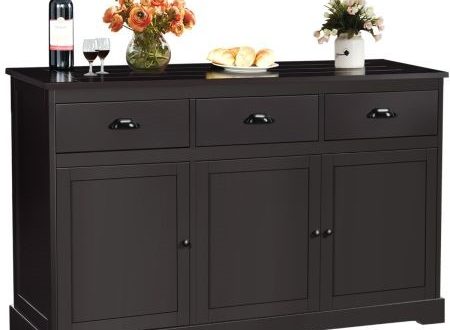
You’ve just moved into your first home, and the kitchen feels like a blank canvas with too many problems. The counters are cluttered, your dishes are stacked precariously in open shelving, and you’re staring at a quote for custom kitchen cabinets that makes your stomach drop. Sound familiar? For many new homeowners, the tension between wanting a beautifully organized kitchen and staying within budget creates a frustrating standoff. But what if the solution isn’t bolted to your walls at all?
Enter the sideboard buffet—a piece of furniture that’s been quietly solving storage and style dilemmas for centuries, and one that’s making a serious comeback in modern kitchens. The central question worth exploring is whether a sideboard buffet might actually serve your needs better than traditional kitchen cabinets, particularly when you’re balancing affordability, aesthetic appeal, and the need to maximize every square foot of space. In this article, we’ll break down how these two options compare, where a sideboard buffet truly shines, and how to decide which path makes the most sense for your home and lifestyle.
Understanding Kitchen Cabinets and Sideboard Buffets: A Basic Comparison
Kitchen cabinets are the workhorses of home furniture—built-in storage units mounted to walls or fitted into designated spaces, designed to house everything from spices to small appliances. They’ve been the default kitchen storage solution for decades, typically requiring professional installation and often custom-built to match specific kitchen dimensions. Once installed, they become a permanent part of your home’s architecture.
A sideboard buffet, on the other hand, traces its roots back to 18th-century dining rooms where it served as a staging area for meals and a display piece for fine china. Over time, this freestanding piece of furniture has evolved dramatically, shedding its purely formal identity to become a versatile storage solution that works just as well in a modern kitchen as it does in a dining room or hallway. Today’s sideboard buffets come in everything from sleek mid-century modern designs to rustic farmhouse styles, making them adaptable to virtually any home aesthetic.
The most fundamental difference between these two options comes down to installation and commitment. Kitchen cabinets are built-in, requiring measurements, hardware, and often a contractor—meaning higher upfront costs and a permanent decision. A sideboard buffet simply needs to be placed against a wall and filled. This distinction has major cost implications: custom kitchen cabinets can run thousands of dollars for a single wall, while a well-crafted sideboard buffet delivers comparable storage at a fraction of that investment. Design flexibility also diverges sharply. Cabinets conform to your kitchen’s existing layout, but a sideboard buffet moves with you, adapts to new rooms, and can be swapped out as your taste evolves. Each option serves storage needs differently—cabinets excel at maximizing vertical wall space with overhead reach, while sideboard buffets prioritize accessible, counter-height storage with generous surface area on top for both function and display.
Key Advantages of Choosing a Sideboard Buffet for New Homeowners
When you’re furnishing your first home, every dollar needs to work overtime. This is exactly where a sideboard buffet earns its place in the conversation. Custom kitchen cabinets often demand professional installation, precise measurements, and materials that inflate costs quickly—sometimes reaching five figures for a full kitchen renovation. A quality sideboard buffet, by contrast, delivers immediate storage and style without the contractor’s invoice. You can redirect those savings toward other home priorities while still achieving a kitchen that looks intentional and put-together.
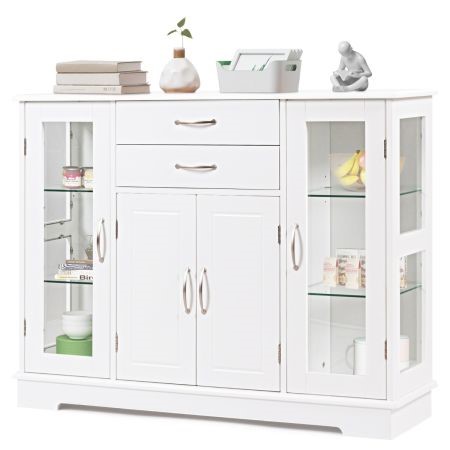
Beyond affordability, the versatility of a sideboard buffet is hard to overstate. Place it along a kitchen wall today, and next year move it to the dining room when your needs shift. Hosting a dinner party? It becomes a serving station. Working from home? The surface doubles as a coffee bar or organizational hub. This adaptability matters enormously for new homeowners who are still discovering how they actually use their spaces. Unlike cabinets locked into one configuration, a sideboard buffet grows and shifts alongside your lifestyle.
From a functional decor standpoint, stylish sideboards do something kitchen cabinets rarely achieve—they make a visual statement while solving a practical problem. A well-chosen piece anchors a room, adding warmth and personality that rows of uniform cabinet doors simply cannot replicate. The top surface provides space for displaying cookbooks, plants, or decorative objects, while the interior shelves and drawers organize dishes, table linens, serving platters, and dining essentials that would otherwise crowd your limited cabinet space. Consider a new homeowner with a galley kitchen: adding a sideboard buffet in an adjacent hallway or open dining area effectively expands kitchen storage without touching the kitchen’s footprint.
Stylish and Affordable Solutions for Modern Kitchens
Today’s sideboard buffets come in a remarkable range of materials and finishes—solid wood, engineered wood with veneer, metal-accented designs, rattan-door styles, and painted options in virtually any color. This variety means you can find something that fits both your aesthetic vision and your budget. Retailers like Costway offer a wide selection of kitchen storage furniture that caters to different styles and price points, making it easier for new homeowners to find pieces that suit their needs. Trending designs lean toward clean lines with textured details: think fluted wood fronts, arched door panels, or mixed-material combinations that bring unique design options into everyday kitchens. For those drawn to mid-century modern, slim-legged sideboards with walnut tones create an airy feel. Farmhouse enthusiasts gravitate toward distressed finishes and sliding barn-style doors. Minimalists find satisfaction in matte white or black pieces with hidden hardware. Thrift stores, estate sales, and online marketplaces also offer vintage sideboards that can be refinished or used as-is for a fraction of retail cost, giving new homeowners the chance to own a one-of-a-kind piece with character that mass-produced cabinets will never match.
Practical Steps to Integrate a Sideboard Buffet in Your Kitchen
Knowing that a sideboard buffet could work for your space is one thing—actually making it happen requires a bit of planning. Here’s how to approach the process so your new piece feels purposeful rather than like an afterthought.
Start by assessing your space and storage needs honestly. Grab a tape measure and identify potential locations: an empty wall in the kitchen, a transitional area between the kitchen and dining room, or even a wide hallway adjacent to your cooking zone. Note the available width, depth, and height, keeping in mind that you’ll need clearance for doors or drawers to open fully. Then take inventory of what you actually need to store. Are you short on dish storage, lacking a place for table linens, or desperate for a landing zone for small appliances? This clarity prevents you from buying something beautiful that doesn’t solve your real problem.
Next, choose a sideboard buffet that matches your dimensions, aesthetic, and functional requirements. If your kitchen skews modern, look for pieces with clean geometry and minimal hardware. If you need maximum storage density, prioritize models with a combination of shelved cabinets and drawers rather than open compartments alone. Pay attention to depth—a piece deeper than 18 inches provides generous interior space but may feel intrusive in tight walkways.
Placement matters more than most people realize. Position your sideboard buffet where it supports your kitchen workflow rather than interrupting it. Ideally, it should sit near the dining table or kitchen entrance so you can grab serving pieces, placemats, or extra supplies without crossing through the cooking zone. Leave at least 36 inches of clearance between the buffet and any facing counter or table to maintain comfortable traffic flow.
Once placed, style the top surface with intention. A functional decor approach works best—group a few items that are both useful and attractive, like a wooden tray holding oils and salt, a small plant, and a stack of cookbooks. Avoid overcrowding the surface, which defeats the purpose of having accessible workspace. Inside, use drawer dividers, small bins, or shelf risers to keep contents organized and visible. Seasonal rotation helps too: store holiday serving ware in the back during off-months and keep everyday items at the front. With these unique design options and organizational habits in place, your sideboard buffet becomes a hardworking piece that earns its spot every single day.
When Kitchen Cabinets Might Still Be the Right Choice
Fairness demands acknowledging that sideboard buffets aren’t a universal answer. There are legitimate scenarios where traditional kitchen cabinets remain the smarter investment, and understanding those situations helps you make a decision you won’t second-guess later.
If your kitchen requires high-capacity storage that maximizes every vertical inch—particularly in compact homes where floor space is scarce but wall space is abundant—built-in cabinets deliver density that no freestanding piece can match. Upper cabinets exploit the area between countertop and ceiling, a zone that sideboard buffets simply cannot reach. For homeowners who need to house built-in appliances like microwaves, ovens, or dishwashers within a seamless cabinetry run, integrated cabinet systems are essentially non-negotiable. The structural support and custom cutouts required for these installations demand purpose-built cabinetry rather than standalone furniture.
Long-term investment is another factor worth weighing. If you plan to stay in your home for a decade or more, quality kitchen cabinets often contribute to resale value in ways that freestanding furniture cannot. Prospective buyers expect to see functional cabinetry in a kitchen—it’s baked into how homes are appraised. A kitchen with insufficient built-in storage may raise red flags during a sale, regardless of how beautiful your sideboard buffet looks in the adjacent room.
Certain kitchen layouts also favor cabinets over alternatives. Galley kitchens with no adjacent hallway or dining area leave little room for a freestanding piece. L-shaped or U-shaped kitchens benefit from continuous cabinetry that wraps corners efficiently, creating workflow zones that a sideboard buffet positioned elsewhere can’t replicate. Homes in humid climates or those prone to pests may also benefit from the sealed, wall-mounted nature of cabinets, which keep contents more protected than furniture sitting at floor level. The best approach for many homeowners is actually a combination—solid base cabinetry where it’s structurally necessary, supplemented by a sideboard buffet that handles overflow storage with far more style and flexibility than adding yet another bank of identical doors.
Finding the Right Storage Balance for Your Home
The sideboard buffet stands as a compelling alternative to traditional kitchen cabinets for new homeowners navigating the intersection of budget constraints, style aspirations, and practical storage needs. Where custom cabinetry demands significant financial commitment and permanent installation, a well-chosen sideboard buffet delivers immediate functionality, visual warmth, and the freedom to adapt as your life and tastes evolve. It solves the space maximization puzzle by extending your kitchen’s storage capacity beyond the kitchen itself, turning adjacent rooms and transitional areas into organized, attractive extensions of your cooking and dining workflow.
That said, the smartest approach isn’t always an either-or decision. Evaluate your specific layout, storage volume requirements, and how long you plan to stay in your home. For many, a foundation of essential built-in cabinets paired with a stylish sideboard buffet creates the ideal balance—structural permanence where it counts, and flexible, personality-driven functional decor everywhere else. Your home should reflect how you actually live, not just how kitchens are supposed to look. Choose pieces that work as hard as you do while making you smile every time you walk into the room.