 Isaiminia World Breaking News & Top Stories
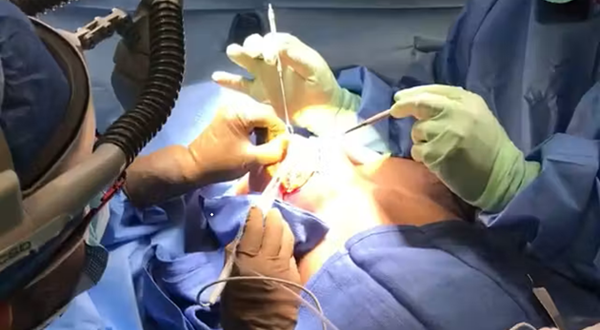
People online often treat explant, capsulectomy and en bloc as if they’re interchangeable. They don’t mean the same thing. An explant simply means taking breast implants out. A capsulectomy means also removing some or all of the scar tissue that forms around them. En bloc is a cancer-surgery term for removing diseased tissue in one piece with a margin around it. Each describes a different amount of surgery, with different risks and recovery.
Anyone researching Breast Implant Removal Sydney options is likely to come across all three, often in the same forum thread or video. When the terms get muddled, some people end up asking for more surgery than they need, while others expect a simpler operation to achieve something it can’t.
What Is the Capsule, and Does It Always Come Out?
Whenever an implant goes in, the body forms a lining of scar tissue around it, and that lining is the capsule. Everyone who has implants has one. In some people it’s thin and soft; in others it thickens, hardens or tightens, which is known as capsular contracture.
It doesn’t always need removing. A thin, healthy capsule can often be left where it is when the implant comes out. Removing it is usually discussed when there’s significant contracture, abnormal-looking capsule tissue, certain kinds of implant rupture, or a specific implant-related diagnosis. The decision depends on what’s found, both before surgery and during it.
Four Terms in Plain Language
It’s worth getting clear on which of these is on the table before going ahead with Breast Implant Removal Sydney surgery. Here’s a short version of each:
- Explant (implant removal): Just the implants come out. The capsule either stays or is handled as a separate step.
- Partial capsulectomy: Only some of the capsule is taken out, typically the bits that are thick or look abnormal.
- Total capsulectomy: The surgeon tries to take out the entire capsule, if there’s a good reason to and it can be done safely.
- En bloc resection: The implant and capsule come out together, with a margin of surrounding tissue, as part of cancer treatment.
Total Doesn’t Always Mean Better
It’s easy to assume that taking out more is the more thorough option. With capsules, that isn’t necessarily true.
At the back, the capsule is often stuck to the chest wall, right up against the ribs and the pectoral muscle, with the chest cavity not far behind. Peeling it away there means more extensive surgery. That brings more chance of bleeding and tissue injury, and a small risk of pneumothorax, where air gets into the space around the lung. Implants placed under the muscle can make this more involved, because the capsule sits in a deeper layer.
So a total capsulectomy is worth doing when there’s a real reason for it. Without one, the extra dissection adds risk without a clear payoff.
Where En Bloc Actually Belongs
En bloc comes from cancer surgery. The idea is to take the affected area out whole, without cutting through it, together with some healthy tissue around the edges.
For implants, it mostly comes up with BIA-ALCL (breast implant-associated anaplastic large cell lymphoma). It’s a rare lymphoma, linked mostly to textured implants. Things to watch for include a breast swelling up long after the original operation, fluid building up around an implant, or a lump in the breast or capsule. If someone might have BIA-ALCL, or has been diagnosed with it, they go down a separate path of tests and cancer treatment, usually with several specialists involved.
Outside that setting, en bloc isn’t considered routinely necessary. Asking for it by default doesn’t make the operation safer. It just makes it bigger.
Bringing the implant card, any old operation reports and recent breast imaging helps answer those questions. If there’s a suspected rupture or unexplained swelling, it should be investigated before the final plan is set.