 Isaiminia World Breaking News & Top Stories
Consumer appetite for premium, artisanal frozen desserts has never been stronger. Today’s café guests aren’t just stopping in for a latte—they’re actively seeking handcrafted gelato, small-batch ice cream, and inventive sorbet that justify a higher price point and a longer visit. For café owners, this shift represents a genuine revenue opportunity, but capturing it isn’t as simple as plugging in a machine and scooping away.
The real challenge lies at the intersection of operational efficiency, limited kitchen space, and increasingly strict health regulations. Producing high-quality frozen desserts consistently, without disrupting your existing service flow or running afoul of local health codes, demands the right equipment from the start. That means looking beyond basic countertop units and focusing on efficient batch freezers paired with NSF-certified ice cream machines—a combination that delivers both product excellence and regulatory confidence. This guide breaks down everything a café owner needs to know about frozen dessert makers, from understanding your equipment options to selecting a commercial batch freezer that fits your workflow, ensuring compliance, and ultimately turning a new dessert line into a measurable boost in daily revenue.
Understanding Your Frozen Dessert Maker Options
The term “frozen dessert maker” covers a surprisingly broad range of equipment, and choosing the wrong category from the start can mean investing in machinery that either caps your growth or overwhelms your operation. For cafés specifically, three equipment types deserve serious consideration, each suited to a different scale and service style.
Countertop ice cream makers are the entry point for most small operations. These compact units are affordable and easy to operate, making them appealing for cafés testing the frozen dessert waters. However, their limited batch sizes and slower cycle times make it difficult to keep up with even modest customer demand during peak hours. They work well for personal use or very low-volume experimentation, but they rarely hold up as a true commercial solution.
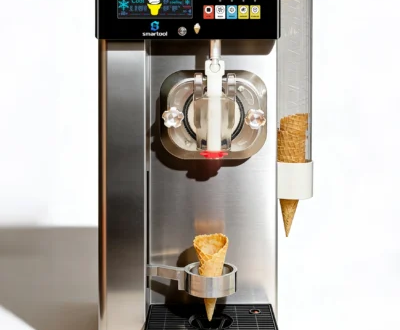
Commercial batch freezers occupy the middle and upper tier of the market, and they’re the workhorse behind most artisan gelato shops, upscale cafés, and boutique creameries. A batch freezer processes a complete portion of mix—churning, aerating, and freezing it to the ideal consistency in a single cycle. The result is a finished product with superior texture and controlled overrun, ready to be hardened or served immediately. For cafés aiming to build a serious dessert program, this is the category that delivers both quality and throughput.
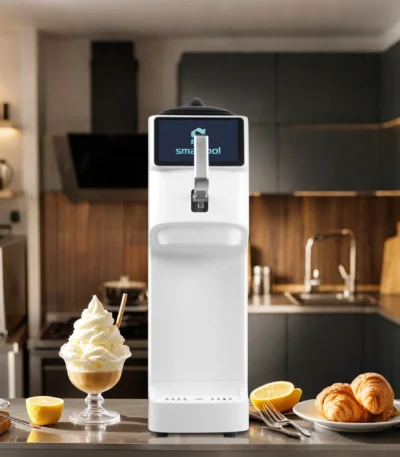
Soft serve equipment operates on a continuous-feed model rather than discrete batches, keeping a ready supply of product at serving temperature. It’s ideal for high-volume, fast-service environments but offers less flexibility for crafting multiple distinct flavors or premium artisan products. For a café prioritizing quality and menu variety over sheer speed, soft serve machines are typically a secondary consideration. Understanding these distinctions makes it clear why batch freezers are the natural focus for cafés ready to expand their dessert offerings meaningfully.
Why a Commercial Batch Freezer is a Game-Changer for Cafés
When café owners make the leap from basic countertop units to a true commercial batch freezer, the difference isn’t subtle—it’s transformational. The most immediate impact shows up in product quality. Batch freezers give you precise control over overrun, the amount of air incorporated during churning, which directly determines whether your gelato is dense and silky or your ice cream is light and creamy. That level of control simply isn’t possible with entry-level equipment, and customers can taste the difference. A premium texture commands a premium price, and that margin improvement compounds across every serving you sell.
Operational efficiency is where batch freezers quietly earn their keep day after day. A quality commercial unit can complete a full cycle in 10 to 15 minutes, meaning you can produce multiple flavors back-to-back during a single prep window without tying up staff for hours. The consistency from batch to batch also matters enormously in a café setting—your guests expect the same pistachio gelato on a Tuesday that they loved on Saturday. Batch freezers deliver that reliability through automated temperature control and standardized cycle programming, removing the guesswork that plagues manual processes.
For cafés with limited kitchen real estate, modern batch freezers are designed with a surprisingly compact footprint. Many countertop-style commercial models fit comfortably on a prep station without requiring dedicated floor space, making integration into an existing café layout far less disruptive than operators expect. Staff training is equally straightforward—most units feature intuitive controls that a barista can master quickly, so your dessert program doesn’t require a dedicated pastry specialist to run smoothly.
Key Features to Look for in a Café Batch Freezer
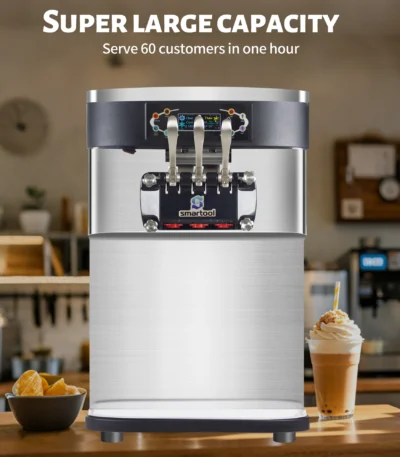
Selecting the right unit comes down to matching specifications to your actual daily workflow. Batch capacity is the starting point—smaller cafés typically need units processing two to four liters per cycle, while busier locations may require six liters or more. Compressor power determines freeze speed and consistency, so prioritize units with robust refrigeration systems rated for continuous commercial use. Easy disassembly for cleaning is non-negotiable; look for removable paddles and bowls that are dishwasher-safe or simple to hand-sanitize between flavor runs. Digital controls with preset programs reduce training time significantly, and a compact footprint under 24 inches wide keeps your prep area functional. Brands like Smartool, known for their commercial ice-making equipment, have helped raise the bar on what compact, café-ready freezing units can deliver in terms of build quality and ease of use.
The Critical Importance of NSF Certification for Your Ice Cream Machine
When evaluating any commercial ice cream machine, NSF certification should function as a hard filter, not an optional feature. NSF International is an independent public health organization that tests and certifies food equipment against rigorous standards covering material safety, cleanability, and structural design. When a machine carries the NSF mark, it means third-party testing has confirmed that every surface contacting your product is non-toxic, non-absorbent, and designed to be thoroughly sanitized between uses. That’s not a marketing claim—it’s a verified standard.
The risks of operating non-certified equipment in a commercial café setting are significant and multidimensional. Most local health departments require NSF-certified equipment as a condition of passing inspection. Running a non-certified machine can result in failed inspections, mandatory shutdowns, and costly fines—disruptions that can erase weeks of dessert revenue in a single visit from an inspector. Beyond regulatory exposure, non-certified machines are frequently built with materials or crevices that harbor bacteria even after routine cleaning, creating genuine contamination risks that put your customers and your reputation on the line.
An NSF-certified ice cream machine is specifically engineered to eliminate these vulnerabilities. Smooth, sealed internal surfaces prevent bacterial buildup, and component designs allow for complete disassembly so every contact point can be properly sanitized. This isn’t just about compliance—it’s about building a dessert program your customers can trust. In an era where food safety incidents spread instantly on social media, the reputational protection that comes with certified equipment is genuinely valuable.
Think of NSF certification less as a regulatory checkbox and more as a long-term operational investment. Certified equipment holds its value better, integrates smoothly into health inspections, and signals to both staff and customers that your café takes food safety seriously. That credibility, built quietly through the right equipment choices, becomes a real competitive advantage over time.
Your Step-by-Step Guide to Choosing the Right Equipment
Cutting through the noise of equipment specs and marketing claims becomes much easier when you approach the decision as a structured process rather than a single purchase choice. Follow these six steps to land on the right batch freezer for your café’s specific situation.
Step 1: Assess Your Demand. Start with honest volume projections before you look at a single spec sheet. Estimate how many portions you expect to sell per day during peak and off-peak periods. A café moving 30 servings daily has fundamentally different equipment needs than one targeting 150. Your projected volume determines the minimum batch capacity and cycle frequency your machine must support without creating bottlenecks during service.
Step 2: Define Your Menu. The products you plan to serve shape your equipment requirements significantly. Hard ice cream, gelato, and sorbet all require slightly different overrun levels and freeze temperatures. If you’re planning a rotating menu of four to six flavors, you need a unit that cycles quickly and cleans easily between runs. Locking in your core menu before shopping prevents you from buying a machine that’s optimized for the wrong product type.
Step 3: Prioritize Compliance. Apply NSF certification as a non-negotiable filter before evaluating any other feature. Remove non-certified machines from consideration entirely, regardless of price or promotional appeal. This single criterion eliminates equipment that could expose your café to inspection failures, fines, or contamination liability.
Step 4: Evaluate Key Specs. With a compliant shortlist in hand, compare units on batch capacity, compressor power, cycle time, cleaning design, and control simplicity. Weight these factors against your volume projections and menu complexity from steps one and two.
Step 5: Consider Total Cost. Purchase price is only one variable. Factor in energy consumption, expected maintenance intervals, replacement part availability, and warranty coverage. A slightly higher upfront cost often translates to lower total operating expense over a three-to-five-year horizon.
Step 6: Plan for Integration. Measure your available prep space carefully and confirm your kitchen’s electrical capacity matches the unit’s power requirements. Map out where staff will stage ingredients, clean components, and store finished product. A machine that fits your workflow seamlessly gets used consistently—one that disrupts your kitchen rhythm gets underutilized.
Maximizing ROI: Marketing Your New Frozen Dessert Line
Purchasing the right equipment is only half the equation—how you position your new frozen dessert program determines whether it becomes a meaningful revenue driver or a novelty that fades after the first month. The most effective starting point is building signature offerings that tie your frozen desserts directly to your existing coffee identity. An affogato pairing your house espresso with fresh-made vanilla gelato, or a seasonal ice cream sandwich using your café’s signature flavors, creates menu items that competitors can’t easily replicate and gives regulars a compelling reason to increase their average spend per visit.
Lean heavily into the “fresh-made” narrative when promoting your program. Customers are willing to pay a premium for handcrafted, small-batch products—but only if they know that’s what they’re getting. Brief signage near your display, a line on your menu board noting “made in-house daily,” or a simple social media post showing your batch freezer in action communicates authenticity far more effectively than generic dessert descriptions. Seasonal flavor rotations amplify this effect, giving regulars something new to anticipate each month and generating organic word-of-mouth each time you introduce a limited offering.
Bundling is one of the most straightforward ways to lift average ticket size without requiring additional marketing spend. A coffee-and-dessert pairing offered at a slight discount encourages customers who might have ordered only a drink to add a gelato or sorbet, increasing per-visit revenue with minimal friction. Over time, these incremental additions compound significantly. A café selling just 25 dessert add-ons daily at a modest margin can generate thousands in additional monthly revenue—returns that make a quality batch freezer investment pay for itself well within the first operating year.
Turning Equipment Choices into Lasting Café Revenue
Building a profitable frozen dessert program isn’t about chasing trends—it’s about making deliberate equipment decisions that support consistent quality, regulatory compliance, and sustainable revenue growth. Efficient batch freezers give café owners the production capability to deliver premium, handcrafted products at a pace that matches real-world demand, without compromising the texture and flavor that justify a higher price point. NSF-certified ice cream machines ensure that every scoop you serve meets the safety and sanitation standards that protect your customers, your staff, and your business from unnecessary risk.
Together, these two priorities—operational efficiency and certified compliance—form the foundation of a dessert program that can genuinely move the needle on your café’s bottom line. The step-by-step selection process outlined here gives you a clear path from volume assessment to kitchen integration, removing the guesswork that often leads operators toward underpowered or non-compliant equipment. The marketing strategies that follow help convert that investment into measurable daily revenue through signature offerings, seasonal rotations, and strategic bundling.
Premium frozen desserts are no longer a niche add-on. For cafés willing to invest in the right equipment, they represent a significant and growing revenue stream—one that rewards quality, builds customer loyalty, and differentiates your brand in an increasingly competitive market. The time to treat your dessert program with the same seriousness as your coffee program is now.