Isaiminia World Breaking News & Top Stories
Picture this: you’re standing in a crowded metro station in Seoul or Tokyo, trains rushing past, announcements blaring overhead in a language you don’t understand, and you need to find the right platform in the next two minutes. You glance at the signs, but nothing registers. A fellow commuter tries to help, gesturing and speaking rapidly, yet the words dissolve into noise. This moment of helplessness is one that millions of urban travelers and expatriates face daily. Now imagine a different outcome—one where the words on those signs appear translated directly in your line of sight, and the stranger’s directions flow into your ear in your native language, all without pulling out a phone or breaking stride.
AI smart glasses are making this scenario a reality, offering real-time multilingual communication that fits seamlessly into the rhythm of city life. However, the dense, fast-moving nature of urban environments introduces a critical challenge: how do you stay safe and spatially aware while engaging with a digital translation layer? This guide offers a comprehensive look at how to effectively and responsibly leverage AI-powered glasses for city navigation and conversation, ensuring that the technology enhances your awareness rather than compromising it.
What Are AI Smart Glasses?
AI smart glasses are wearable devices that go far beyond simply displaying notifications or overlaying basic digital elements onto your view. What sets them apart from standard smart glasses or conventional augmented reality headsets is their deeply integrated, contextual AI processing—these devices don’t just show you information, they understand your environment and respond intelligently to what’s happening around you in real time.
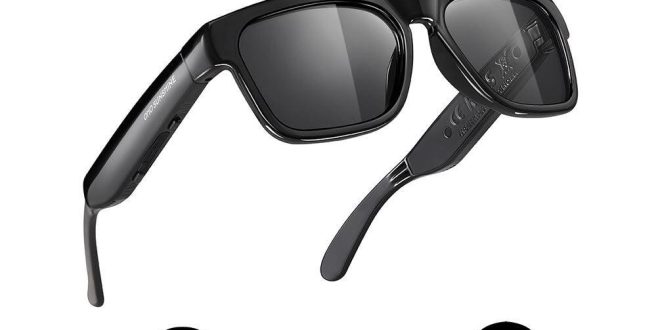
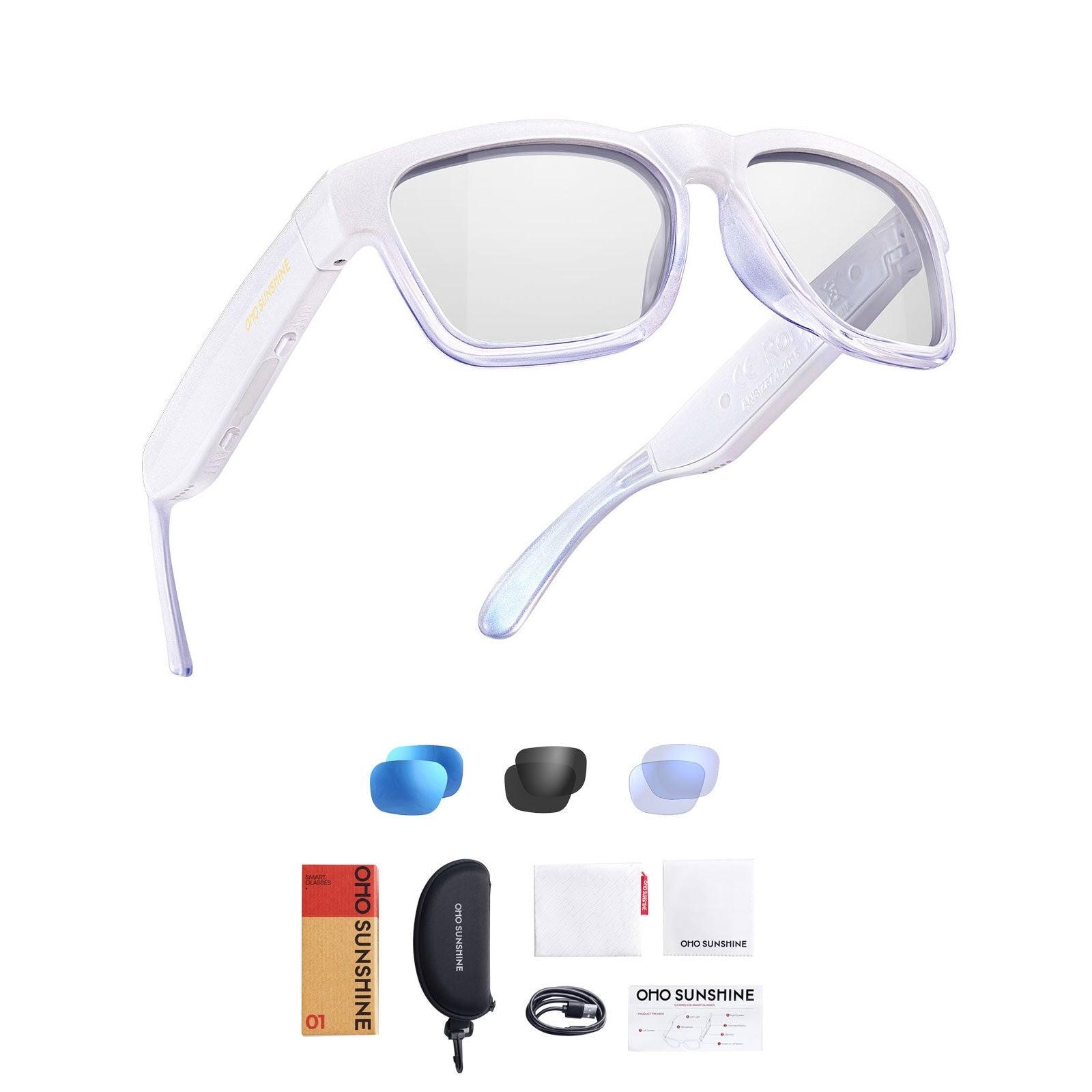
At their core, smart glasses ai combine several key components working in concert. A forward-facing camera captures visual input like text on signs or facial expressions during conversation. Built-in microphones pick up ambient speech and direct dialogue. Speakers, bone conduction transducers, or paired earpieces deliver audio output discreetly. A heads-up display—whether a small prism, microLED projector, or waveguide lens—presents translated text or contextual information within your field of vision. Tying everything together is either an onboard AI chip or a persistent connection to cloud-based processors capable of handling complex language models and neural machine translation.
The journey from novelty gadget to practical urban tool has been rapid. Early iterations were bulky, socially awkward, and limited in functionality. Today’s generation—from brands like ohosunshine and other eyewear innovators—blends into everyday frames while packing enough intelligence to serve as a real-time communication assistant. They’ve matured specifically around features that matter for daily life—live translation, contextual suggestions, voice-activated queries, and hands-free navigation—making them genuinely useful companions for anyone navigating a multilingual cityscape rather than mere tech demonstrations.
The Role of Cloud-Based Translation in AI-Powered Glasses
When you speak to a vendor at a street market in Bangkok or read a transit notice in Berlin, the translation happening through your AI smart glasses isn’t occurring entirely within the frames sitting on your face. In most cases, the heavy computational lifting takes place on powerful remote servers—a process known as cloud-based translation. Your glasses capture the audio or visual text, compress it into a data packet, transmit it to specialized servers running advanced neural machine translation models, and receive the translated output back in milliseconds. This round trip, when supported by a solid mobile connection, feels nearly instantaneous to the user.
The advantages of this cloud-dependent approach are substantial. Remote servers maintain access to vast, continuously updated linguistic databases covering hundreds of language pairs, regional dialects, and domain-specific terminology. They leverage natural language processing that accounts for context—distinguishing, for example, between “platform” as a train stop versus a digital service based on surrounding words and your physical location. These models improve weekly as they ingest new data, meaning your glasses get smarter over time without requiring a hardware upgrade.
Offline translation modes do exist and serve an important backup role when connectivity drops—in underground tunnels, remote neighborhoods, or countries with limited data infrastructure. However, offline packages typically support fewer languages, struggle with idiomatic expressions, and lack the contextual nuance that makes conversation feel natural. For the complex, rapid-fire dialogue you encounter in a busy urban setting—a taxi driver explaining a detour, a pharmacist describing medication instructions—cloud processing delivers noticeably superior results.
How Translation Works in Practice for Urban Commuters
Using translation features on AI smart glasses follows a streamlined workflow designed for speed and minimal distraction. First, you activate the translation mode—typically through a brief voice command like “translate Korean” or a single tap on the glasses’ temple. The device immediately begins listening through its directional microphones, which are tuned to isolate the voice of the person facing you from surrounding urban noise like traffic, construction, or crowd chatter.
Once the speaker’s words are captured, the audio streams to the cloud where it’s transcribed, analyzed for meaning and context, and translated into your target language. You then receive the output in one of two ways depending on your preference and safety needs: as a concise text overlay appearing in your peripheral display, or as spoken audio delivered through bone conduction or a paired earbud. The entire process—from the moment someone finishes a sentence to when you receive its meaning—typically takes between one and three seconds.
When you want to reply, you simply speak in your own language. The glasses capture your response, translate it, and play it aloud through a small outward-facing speaker so your conversation partner hears their language. Some devices also display your translated words as text on the outer lens surface, which proves especially useful in noisy environments where audio output might get lost. For urban commuters, the key design principle is that none of this requires you to look down at a screen, fumble through menus, or stop walking. You initiate, listen, read or hear, and respond—all while keeping your head up and your attention on the city around you.
Real-World Urban Use Cases for Multilingual Communication
The practical applications of this technology span nearly every interaction a traveler or expatriate encounters in a foreign city. Asking for directions becomes a genuine two-way conversation rather than a pantomime of gestures and confused expressions—you can clarify details, ask follow-up questions, and confirm understanding on the spot. At restaurants, you read menus translated in your display and communicate dietary restrictions or preferences directly to servers without relying on potentially outdated translation cards.
Public transport presents one of the most compelling use cases. Overhead announcements about delays, platform changes, or service disruptions appear as translated text in real time, giving you the same situational awareness as native speakers. When minor emergencies arise—a lost wallet, a medical need, or a missed connection—being able to communicate clearly with station staff or bystanders transforms a potential crisis into a manageable situation. The cumulative effect is a dramatic reduction in the anxiety that accompanies operating in an unfamiliar linguistic environment, replaced by a sense of independence and confidence that makes urban exploration genuinely enjoyable rather than stressful.
Safety First: Key Urban Safety Features in AI Smart Glasses
Maintaining Situational Awareness
The greatest risk of any wearable display technology in a city environment is what designers call “digital blindness”—becoming so absorbed in on-screen information that you lose track of physical surroundings. AI smart glasses engineered for urban use address this through deliberate design constraints that keep you anchored in the real world even as translations flow.
Transparent displays represent the first line of defense. Rather than filling your entire field of view with text, well-designed translation overlays occupy a small region of your peripheral vision—typically the upper-right or lower-left corner of one lens. The text appears as a subtle, semi-transparent caption that you can glance at without shifting your gaze away from the sidewalk, intersection, or person in front of you. When no translation is active, the display disappears entirely, leaving you with unobstructed vision.
For situations where even peripheral text feels distracting—crossing a busy intersection, navigating a crowded market, or descending unfamiliar stairs—audio-focused translation through bone conduction transducers keeps your eyes completely free. Because bone conduction doesn’t seal your ear canal, you still hear car horns, bicycle bells, and approaching footsteps naturally. This dual-channel approach lets you absorb translated speech while maintaining the auditory awareness that urban survival often depends on.
Quick activation design also matters enormously. Every second spent navigating menus is a second your attention leaves the environment. The best implementations use a single voice command or one tap on the temple arm to toggle translation on or off. No scrolling, no screen selection, no confirmation prompts. You should adopt personal safety habits alongside these features: step to the side of a sidewalk before initiating a longer conversation, avoid activating visual overlays while crossing streets, and pause translation mode entirely when navigating complex traffic situations like roundabouts or unmarked intersections.
Data Privacy and Security for Urban Users
Every sentence spoken near your glasses that gets sent to the cloud for translation represents personal data traversing public networks—a reality that demands serious security architecture. Reputable AI smart glasses encrypt all audio and text data using end-to-end protocols before transmission, meaning that even if someone intercepts the data packet mid-transit, they cannot decode its contents. The translation servers process your request, return the result, and in most configurations discard the raw audio within seconds rather than storing it indefinitely.
Anonymization adds another layer of protection. Your voice data is typically stripped of identifying metadata—device serial numbers, precise GPS coordinates, and account identifiers are separated from the linguistic content before processing. This means the server handling your Korean-to-English translation doesn’t know who you are or exactly where you’re standing, only that a sentence needs translating.
To take control of your privacy, open your device’s companion app and review three specific settings: data retention duration (set to minimum or zero), conversation history storage (disable if you don’t need records), and third-party data sharing permissions (opt out of any research or improvement programs you’re uncomfortable with). Periodically clearing cached translations from the device itself also prevents sensitive conversation fragments from remaining accessible if the glasses are lost or stolen.
Additional Safety Integrations
Beyond translation-specific safeguards, AI smart glasses increasingly incorporate features that enhance overall urban safety. Ambient sound pass-through technology actively monitors environmental audio and prioritizes critical sounds—emergency vehicle sirens, train departure warnings, or someone shouting a warning—by momentarily reducing translation audio volume and letting those alerts reach you clearly. Some models even identify specific urban sound patterns like approaching electric vehicles, which are notoriously quiet, and deliver a subtle haptic vibration or directional audio cue to alert you.
Integration with navigation applications transforms the glasses into a hands-free wayfinding tool that complements translation. Instead of glancing at your phone for turn-by-turn directions, you receive gentle audio prompts or small directional arrows in your display, keeping both hands free and your phone safely in your pocket—reducing theft risk in unfamiliar neighborhoods. When combined with live translation of street signs and transit information, this creates a unified awareness system where language comprehension and spatial orientation work together rather than competing for your attention.
Embracing Borderless Urban Navigation with AI Smart Glasses
AI smart glasses represent a fundamental shift in how we navigate multilingual urban environments—transforming language barriers from sources of stress and isolation into seamless, almost invisible challenges handled in real time. The combination of cloud-based neural translation, contextual awareness, and hands-free delivery means that meaningful communication across languages no longer requires stopping, searching, or surrendering your attention to a handheld screen.
Yet this power comes with responsibility. The same dense, fast-moving city streets that make instant translation so valuable also demand your full awareness. The technology works best when you treat it as a complement to your senses rather than a replacement—using audio translation at crosswalks, stepping aside for extended conversations, keeping privacy settings actively managed, and letting ambient sound pass-through keep you connected to your physical surroundings. By embracing these practices, you gain the confidence of linguistic independence without sacrificing the street-level alertness that keeps you safe.
As these devices continue to evolve—with faster processing, broader language coverage, and increasingly intelligent environmental awareness—the vision of truly borderless urban life moves closer to reality. The world’s cities are already connected by transit lines and shared infrastructure; AI smart glasses are quietly connecting them by language, one conversation at a time.