 Isaiminia World Breaking News & Top Stories
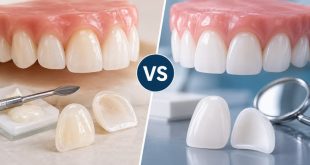
You leave the dentist with temporary veneers and then notice something you did not expect. A few of the provisional teeth are attached to each other. That can feel strange fast, especially if you were expecting each tooth to sit on its own. You may wonder if something went wrong, if it will be harder to eat, or if the final result is at risk. In Kalispell, Montana dental care, this can be a normal part of the temporary veneer process.
In many cases, joined temporaries are deliberate. Dentists sometimes connect provisional veneers or crowns to improve strength, hold position, protect prepared teeth, and help your bite stay stable while your final restorations are being made. It is not done in every case, and it is not always the best choice, but it is a common, practical solution when individual temporary pieces would be more likely to crack, shift, or come off.
Connected temporary veneers are often used to prevent breakage and movement
Temporary dental veneer connectors are the small bridges of material that link one provisional tooth to the next. They are usually made as part of a single temporary unit. This is most common in the front of the mouth, where appearance matters and the temporary material can be thin and easier to fracture.
If several front teeth were prepared, separate temporary veneers may not have enough thickness to stay strong on their own. A connected design spreads force across more than one tooth. That lowers the chance that one temporary pops off when you bite into soft bread, brush your teeth, or wake up clenching after sleep.
Position matters too. During the provisional phase, your dentist is protecting the shape and spacing created for the final veneers. If each temporary tooth were fully separate, a tiny shift in one could affect contact points, symmetry, and the fit of the final work. Joining them can act like a stabilizer while the lab completes the permanent restorations.
This approach also helps when the prepared teeth have less natural retention. Veneers and other conservative cosmetic preparations can leave limited surface area for a temporary to grip. Connecting the units gives the whole provisional more resistance to being dislodged.
Provisional teeth joined together can feel bulky, but there is a reason for it
You may feel extra thickness between teeth or near the gumline. That is one of the tradeoffs with joined temporary veneers. The connector needs enough material to stay intact, and temporary materials are not as strong or refined as final porcelain. What feels slightly bulky now may be part of what keeps the provisional from breaking in the first week.
This can be frustrating if you are speaking a lot for work, smiling in photos, or trying to eat normally. Temporary restorations are a short term stage, not a polished preview in every detail. They often show the general shape, length, and look, but they are built first for protection and stability.
There is also a biological reason dentists are cautious. Provisional restorations influence gum tissue, tooth sensitivity, and function. A review on provisional restorations in fixed prosthodontics explains that temporaries are meant to protect the pulp, maintain position, preserve function, and support soft tissue health. You can read that research in this overview of provisional restorations.
Dental training materials also reflect how provisional restorations are shaped and managed to preserve contour and support the final result. This prosthodontic competency manual outlines the clinical standards behind provisional work.
Separate provisional veneers and connected temporaries each have clear tradeoffs
Some patients assume separate is always better because it feels more natural. Sometimes that is true. If each temporary has enough strength and retention, individual provisionals can make flossing easier and can look cleaner between teeth. In other cases, separate units create more risk than benefit.
| Feature | Connected Temporary Veneers | Separate Temporary Veneers |
|---|---|---|
| Strength | Usually stronger across multiple teeth | More likely to chip or detach if thin |
| Tooth position control | Better at holding spacing and alignment | Higher chance of small shifts between teeth |
| Cleaning between teeth | Harder to floss normally | Easier to clean between units |
| Comfort and feel | Can feel bulky at first | Often feels more natural if it stays in place |
| Use case | Often chosen for multiple front teeth or lower retention cases | Often chosen when each temporary can stand alone safely |
If you are dealing with several front teeth, a cosmetic case, or a bite that puts extra stress on the temporaries, connected provisionals may be the safer design. If your case is simpler, your dentist may choose individual temporaries instead. This is why there is no one right answer for every general and cosmetic dentist case.
What to do if your temporary veneer bridge feels wrong
Some discomfort is expected. Sharp edges, a temporary that rocks, gum bleeding that keeps worsening, or pain when biting are different. Those signs deserve a call. A connector that traps food heavily or prevents you from closing properly may need adjustment. Waiting it out can turn a minor fix into a broken temporary or irritated gums.
It also helps to know what not to do. Do not test the strength of the temporary with sticky candy, crusty bread, tough meat, or nail biting. Do not force floss down between connected units. If your dentist gave you a floss threader, super floss, or a slide through method, use that. If not, ask before trying to improvise.
Three practical steps to protect temporary veneers and avoid setbacks
- Eat like the temporaries are on loan. Choose softer foods, cut food into small pieces, and bite from the sides if your front temporaries are connected. This reduces the force that often causes a provisional tooth connector to crack.
- Clean gently and specifically. Brush with a soft toothbrush and avoid snapping floss between joined teeth. If cleaning feels confusing, ask your dental office to show you the exact technique for your provisional design.
- Report fit changes early. If the temporary feels loose, your bite changes, or one side lifts when you chew, contact your dentist before it fully comes off. Quick recementation is easier than remaking a broken temporary.
The temporary stage is meant to protect the final result
If some of your provisional teeth are joined together, that usually means your dentist chose stability over delicacy. It can feel awkward, and yes, a little disappointing if you expected a perfect preview, but the goal is to get you safely to the final veneers with your teeth, gums, and bite in good shape.
Provisional teeth connected together are often a sign of planning, not a problem. If yours feel off, painful, or hard to maintain, reach out to your dental office and ask for an adjustment. A short visit now can protect the final cosmetic result and make the temporary phase much easier to live with.