 Isaiminia World Breaking News & Top Stories
It’s 2 a.m., your baby is crying, and you’re standing in the kitchen desperately trying to warm a bottle of breast milk without scalding it or waiting forever. Every parent knows this moment — that frantic balance between urgency and caution. But beyond the exhaustion lies a deeper concern that keeps health-conscious parents up at night: is the warming process actually destroying the very nutrients that make breast milk so valuable?
Breast milk is a carefully crafted blend of antibodies, enzymes, and vitamins designed to support your baby’s growth and immune system. Overheating or using unsafe equipment can compromise that nutritional integrity — and even introduce harmful chemicals like BPA directly into your baby’s feed. The stakes feel high because they are.
This article is your practical guide to choosing and using a baby bottle warmer that prioritizes both safety and nutrient preservation. We’ll cover why gentle warming technology matters, the key features to look for — including precise temperature control and BPA-free construction — and how cordless options add convenience without sacrificing safety. You’ll also find a clear buying guide and everyday usage tips to make every feeding session confident and stress-free.
Why Nutrient Preservation is Critical in Breast Milk Warming
Breast milk is far more than simple nutrition — it’s a living fluid containing over 1,000 bioactive components. Immunoglobulins like IgA shield your baby’s gut from harmful pathogens. Enzymes such as lipase break down fats for easier digestion. Vitamins C and B complex support neurological development, while lactoferrin actively fights bacterial infections. Together, these elements create a nutritional profile that no formula can fully replicate.
The problem is that many of these components are remarkably heat-sensitive. Research shows that warming breast milk above 104°F (40°C) begins degrading key antibodies, and temperatures exceeding 140°F (60°C) can destroy up to 60% of its immunological properties. Uneven heating is equally damaging — hot spots within the milk can silently obliterate concentrated pockets of nutrients even when the average bottle temperature seems acceptable. Microwave warming is particularly notorious for creating these dangerous temperature inconsistencies.
This is where gentle warming technology becomes essential. Rather than applying aggressive, direct heat, a well-designed bottle warmer raises milk temperature incrementally — mimicking the gradual, body-temperature warmth a baby would receive during direct breastfeeding. Water bath warming methods, for example, distribute heat uniformly around the bottle, bringing milk to the ideal 98–104°F range without thermal shock to its delicate components.
For health-conscious parents investing time in pumping and storing breast milk, the warming step should never undo that effort. Choosing a warmer built around nutrient preservation isn’t a luxury — it’s a logical extension of the same care that goes into every other aspect of your baby’s feeding routine.
Key Features to Look for in a Safe and Effective Bottle Warmer
Not all bottle warmers are created equal. With so many options on the market, it’s easy to get distracted by sleek designs or low price tags — but for parents focused on both safety and nutrition, the internal mechanics and materials matter far more than aesthetics. These four features should be non-negotiable on your checklist.
Precision with a Temperature Control Bottle Warmer
A warmer without precise temperature control is essentially guesswork with your baby’s nutrition. Look for models that offer adjustable settings with a reliable thermostatic mechanism, allowing you to lock in temperatures within the 98–104°F range consistently. This prevents accidental overheating across warming cycles and ensures every bottle reaches the same safe, drinkable warmth — protecting both sensitive nutrients and your baby’s delicate palate.
Safety First: The Importance of a BPA-Free Bottle Warmer
BPA (bisphenol-A) is a synthetic chemical found in certain plastics that can migrate into food and liquids when heated. Exposure during infancy has been linked to hormonal disruption and developmental concerns. A BPA-free bottle warmer eliminates this risk entirely, and health-conscious parents should extend that scrutiny to all interior components — including water reservoirs and bottle contact surfaces — ensuring every material touching or surrounding the milk meets non-toxic standards.
How Gentle Warming Technology Protects Nutrients
Water bath warming surrounds the bottle with evenly heated water, raising milk temperature gradually from the outside in — mimicking the natural warmth of the body without creating hot spots. Steam-based warmers can also be effective when carefully calibrated. Both methods stand in sharp contrast to microwave heating, which agitates water molecules unevenly, generating internal temperature spikes that silently destroy antibodies and enzymes before you even test the bottle’s surface.
Flexibility and Safety with a Cordless Milk Warmer
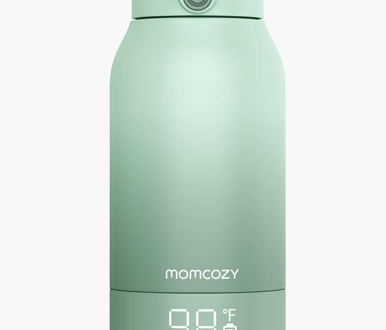
A cordless milk warmer offers genuine practical advantages beyond simple convenience. During nighttime feedings or travel, eliminating a power cord reduces trip hazards in dark rooms and untidy spaces — a real safety concern when you’re sleep-deprived and moving quickly. Battery-powered or rechargeable models, such as those in the Momcozy lineup, let you warm bottles at the bedside, in the car, or anywhere your feeding routine takes you, without compromising on the gentle, controlled heating your baby’s milk requires.
Step-by-Step Guide to Choosing the Best Baby Bottle Warmer
Finding the right bottle warmer feels overwhelming when every product claims to be the safest or the fastest. A structured approach cuts through the noise and keeps your focus on what genuinely matters for your baby’s health and your daily routine.
Step 1: Assess your specific needs. Start by mapping out how you’ll actually use the warmer. Do you primarily warm refrigerated milk or frozen? How often do you feed overnight versus during the day? Which bottle brands are already in your rotation? A warmer that fits your existing bottles and matches your feeding frequency will deliver far more practical value than one loaded with features you’ll never use.
Step 2: Prioritize nutrient preservation and safe materials. Filter out any model that lacks precise temperature control or BPA-free certification before comparing further. These two criteria are baseline requirements, not optional upgrades. A warmer that overheats milk or leaches chemicals undermines the entire point of feeding breast milk in the first place.
Step 3: Compare models against your core criteria. Once you have a shortlist of temperature-controlled, BPA-free options, look at warming method. Water bath designs generally offer the most uniform, gentle heat — particularly valuable if your baby is sensitive or you’re working with nutrient-dense hindmilk. Brands like Momcozy have built their bottle warmers around this water bath approach, making them a practical reference point when evaluating how other models stack up on heating consistency.
Step 4: Read reviews from parents with similar priorities. Focus on feedback specifically mentioning nutrient preservation, ease of use at night, and long-term durability. Look for patterns across multiple reviews rather than relying on isolated opinions or marketing claims.
Step 5: Evaluate budget alongside warranty and longevity. A quality warmer used consistently for 12 to 18 months represents genuine value per use. Prioritize models backed by at least a one-year warranty — a manufacturer confident in their product will stand behind it. Spending slightly more upfront on a reliable, well-built warmer typically costs less than replacing cheaper models that fail under daily use.
Practical Solutions and Usage Tips for Optimal Warming
Even the best bottle warmer delivers poor results without consistent technique. These practical steps turn your equipment into a reliable tool for every feeding session.
Before warming, always check that your water reservoir is filled to the recommended level — insufficient water causes uneven heat distribution regardless of how well-calibrated your warmer is. For refrigerated milk, allow the bottle to sit at room temperature for two to three minutes before placing it in the warmer. This reduces the temperature gap the warmer must bridge, enabling gentler, more controlled heating throughout.
Set your warmer to the 98–104°F range and resist the temptation to increase the temperature to speed things up. Patience here directly protects your milk’s antibodies and enzymes. Once warming completes, gently swirl — never shake — the bottle to distribute heat evenly, then test a few drops on your inner wrist before feeding. If it feels neutral or slightly warm, the temperature is appropriate.
Two rules that should become non-negotiable: never reheat breast milk a second time, and never return warmed milk to the refrigerator. Reheating degrades nutrients further and increases bacterial growth risk. Any milk your baby doesn’t finish within two hours should be discarded.
For ongoing performance, descale your warmer’s water chamber weekly if you use hard tap water — mineral buildup disrupts heating consistency over time. Distilled water extends the warmer’s lifespan and maintains heating accuracy. Finally, inspect seals and interior surfaces monthly for discoloration or residue, which can indicate material degradation that warrants replacing the unit entirely.
Making Every Feeding Count
Warming breast milk safely is one of those small daily decisions that carries outsized importance. Every feeding is an opportunity to deliver the full nutritional benefit of breast milk to your baby — or to quietly diminish it through rushed technique or the wrong equipment. The good news is that making the right choice isn’t complicated once you know what to prioritize.
A quality bottle warmer built around gentle warming technology, precise temperature control, and BPA-free materials isn’t an indulgence — it’s a practical tool that protects everything you’ve invested in pumping and storing breast milk. Pair it with consistent warming habits: fill the reservoir correctly, warm gradually to the 98–104°F range, swirl rather than shake, and never reheat. These small actions compound into meaningful protection for your baby’s developing immune system and overall health.
As a health-conscious parent, you’ve already done the hard work of choosing breast milk. The warmer you use is the final link in that chain — and it deserves the same careful consideration as everything else in your feeding routine. With the right equipment and approach in place, those 2 a.m. feeding moments become less frantic and more confident. That peace of mind, built on informed decisions, is exactly what both you and your baby deserve.