Isaiminia World Breaking News & Top Stories
Bringing a cat home for the first time is an exciting milestone — until you realize that setting up the perfect litter box is far more complicated than it looks. Many new cat owners quickly discover their feline companion refusing to use the box, tracking litter across the floor, or worse, developing health issues tied to an unsuitable setup. These early frustrations are incredibly common, yet entirely avoidable with the right knowledge.
At the heart of a happy, healthy cat is one often-overlooked essential: the litter box. Choosing the best litter box isn’t just about convenience for you — it directly shapes your cat’s sense of security, physical comfort, and long-term well-being. A poorly designed box can trigger stress, behavioral problems, and even medical concerns, while the right choice fosters trust and routine from day one.
This guide is designed to walk you through everything you need to know, from understanding what cats instinctively need in a bathroom space to evaluating safety features, cleaning mechanisms, and comfort-focused designs. Whether you’re a first-time cat parent or looking to upgrade your current setup, you’ll find practical, expert-backed insights here to help you make a confident, informed decision for ultimate cat comfort and safety.
Why Choosing the Best Litter Box is Crucial for Feline Well-being
Understanding Cat Behavior and Litter Box Preferences
Cats are instinctively driven by the need for privacy, cleanliness, and control over their elimination space. In the wild, felines are both predators and prey, which means feeling exposed during vulnerable moments triggers genuine stress. A litter box that fails to honor these instincts — whether it’s too cramped, too open, or consistently dirty — will likely be avoided altogether. New cat owners are often surprised to discover their cat eliminating outside the box, not out of spite, but out of a deeply wired survival response. Understanding this behavior is the first step toward making a choice your cat will actually accept and use consistently.
The Direct Link Between Litter Box Safety and Feline Health
Beyond behavior, the wrong litter box can pose real physical risks. Boxes made from low-quality plastics may leach harmful chemicals over time, especially when exposed to urine. Sharp edges or unstable designs can cause cuts or tip-overs, particularly in kittens and senior cats who are less agile. A box that’s too small forces cats into awkward postures, which over time can contribute to joint strain and reluctance to use it — a cycle that often leads to urinary retention and infections.
For new cat owners especially, prioritizing safety from the very beginning prevents a cascade of costly and stressful problems down the line. The best litter box isn’t simply the most attractive or affordable option on the shelf — it’s one built with non-toxic, durable materials, a stable base that won’t shift under movement, and a design that accommodates your cat’s specific size and mobility. When comfort and safety are treated as non-negotiable rather than optional upgrades, cats develop positive associations with their bathroom space, reducing stress-related behaviors and supporting long-term urinary and digestive health. Getting this right early makes every other aspect of cat ownership considerably easier.
Essential Features of the Best Litter Box for Optimal Performance
Safety Design Elements Every Cat Owner Must Consider
Safety isn’t an afterthought — it’s the foundation of any well-designed litter box. Smooth, rounded interior edges prevent scratches on paws and underbellies, which matters especially for kittens who tumble in and out with less coordination. A non-tip base is equally critical; a box that shifts or flips under a cat’s weight creates a startling experience that can permanently discourage use. Material quality deserves close attention too. Look for BPA-free, hypoallergenic plastics that won’t degrade or off-gas harmful compounds when exposed to ammonia from urine. These seemingly small details collectively determine whether your cat feels safe enough to return to the box consistently.
Exploring Cleaning Mechanisms for Hassle-Free Maintenance
The cleaning mechanism you choose shapes both your daily routine and your cat’s hygiene. Manual boxes are straightforward and affordable, but they demand daily scooping to stay acceptably clean — skip even one day and many cats will protest loudly or find an alternative spot. Self-cleaning systems automate waste removal through raking, rotating, or sifting mechanisms, dramatically cutting down the effort required while keeping odor under control between full cleans. For busy households or multi-cat setups, a reliable self-cleaning mechanism isn’t a luxury — it’s a practical necessity. Whichever system you choose, prioritize designs with removable waste drawers or liners that simplify disposal without spreading mess.
Prioritizing Cat Comfort in Litter Box Design and Placement
Comfort goes beyond cushioning — it encompasses space, accessibility, and sensory experience. The box should be large enough for your cat to enter, turn a full circle, and dig without feeling cramped. Senior cats or those with joint issues benefit greatly from low-entry designs that eliminate the need to leap over tall walls. Noise is another overlooked factor: self-cleaning units with loud motors can startle cats mid-use, creating lasting aversion. Opt for models with quiet operation ratings when possible. Placement amplifies everything — position the box in a low-traffic, low-noise area that offers some visual privacy without being so isolated that your cat feels trapped. Getting these comfort details right from the start transforms the litter box from a source of stress into a space your cat actively trusts.
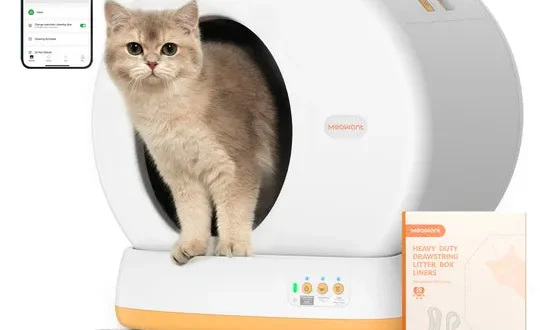
Meowant Self-Cleaning Box: A Deep Dive into Innovation and Efficiency
How the Meowant Self-Cleaning Box Mechanism Works
The Meowant self-cleaning box represents a meaningful leap forward in automated litter box technology. At its core, the system relies on smart sensor detection that identifies when a cat has entered and exited the box. After a preset delay — giving litter time to clump properly — the mechanism activates, rotating or raking waste into a sealed compartment below the main chamber. This sealed waste drawer contains odors far more effectively than open scooping ever could, and it takes only seconds to remove and replace during routine maintenance. The entire cycle runs quietly enough to avoid startling cats, which is a detail that separates well-engineered units from cheaper alternatives that cats quickly learn to fear and avoid.
Benefits of the Meowant Box for New Cat Owners
For someone navigating cat ownership for the first time, the Meowant self-cleaning box removes one of the most time-consuming and unpleasant daily tasks from the equation. Instead of committing to twice-daily scooping just to keep odor manageable, owners can rely on the automated system to handle waste removal consistently — even on busy days when routines slip. The enclosed design naturally controls odor at the source, keeping living spaces fresher without relying on heavy deodorizers. Safety features are thoughtfully integrated as well: the smooth interior surfaces, stable base, and cat-detection sensors that pause the cleaning cycle if a pet re-enters mid-operation all reflect a design philosophy centered on protecting the animal first. For new cat owners especially, having a system that handles hygiene reliably while keeping their cat safe and comfortable significantly flattens the learning curve of early pet care.
Practical Solutions and Steps for New Cat Owners to Ensure Litter Box Success
Step-by-Step Guide to Choosing a Safe and Comfortable Litter Box
Selecting the right litter box becomes far less overwhelming when you approach it systematically. Start by assessing your cat’s size and age — a kitten needs lower entry walls and a smaller footprint, while a large adult cat requires a box long enough to turn around comfortably without feeling squeezed. Senior cats or those with arthritis need front-entry designs with minimal step height. Once you have those physical requirements mapped out, shift your focus to safety ratings and material certifications. Look specifically for BPA-free labels and smooth interior finishes with no sharp seams. From there, compare cleaning mechanisms honestly against your lifestyle: if your schedule is unpredictable, a self-cleaning model with an automated cycle and sealed waste drawer — such as those offered by Meowant — will serve you far better than a manual box that depends on daily attention. Finally, read verified owner reviews with a specific eye toward long-term durability and how cats actually responded during the adjustment period — these real-world accounts reveal problems that product descriptions never mention.
Pro Tips for Maintaining Cleanliness and Safety Over Time
Even the best litter box underperforms without consistent maintenance. For manual boxes, scooping at least once daily is the minimum threshold — twice daily is significantly better for multi-cat households. Every one to two weeks, empty the box entirely, wash it with mild unscented soap and warm water, and allow it to dry completely before refilling. Avoid harsh chemical cleaners, which leave residues that cats find repellent and that can irritate sensitive respiratory systems. For self-cleaning units, empty the waste drawer before it reaches capacity and wipe down sensors monthly to keep detection accurate. Litter depth matters more than most owners realize — maintain roughly two to three inches to allow proper digging and clumping without waste pooling at the bottom. Inspect the box periodically for cracks, discoloration, or warping, all of which signal it’s time for a replacement. Placement should stay consistent; moving the box unexpectedly is one of the most common triggers for avoidance behavior in otherwise well-adjusted cats.
Your Path to a Happier, Healthier Cat Starts with the Right Litter Box
Choosing the best litter box is one of the most impactful decisions you’ll make as a new cat owner — and one that pays dividends in your cat’s health, behavior, and overall happiness for years to come. Throughout this guide, we’ve explored why litter box selection goes far beyond aesthetics or convenience, touching on feline instincts, physical safety, and the real health consequences of getting it wrong. We’ve broken down the essential features that separate a genuinely good box from a merely adequate one: non-toxic materials, stable construction, appropriate sizing, and a cleaning mechanism that realistically fits your lifestyle.
Solutions like the Meowant self-cleaning box demonstrate that modern design can honor both a cat’s need for a clean, quiet, safe space and an owner’s need for something manageable in a busy life. When safety and comfort are treated as the baseline rather than premium extras, the entire dynamic between cat and owner improves — fewer behavioral issues, fewer vet visits, and far less daily stress on both sides.
Armed with the practical steps and maintenance tips covered here, you’re well-positioned to make a confident choice and keep that setup performing at its best long-term. Start with your cat’s specific needs, stay consistent with upkeep, and trust that the investment in the right litter box is an investment in a genuinely harmonious life with your pet.