Isaiminia World Breaking News & Top Stories
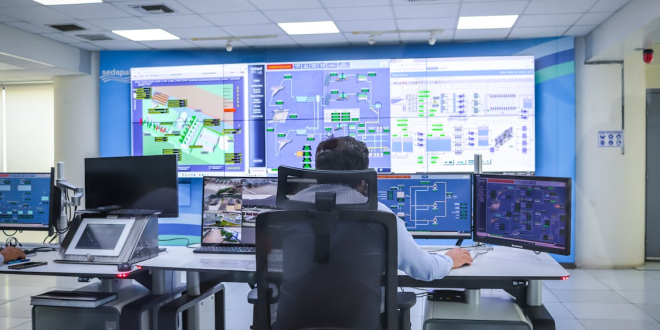
Automation doesn’t mean throwing inspectors out on the street.
But it does mean upgrading the inspection process to keep a business moving forward.
Replacing manual gauging with screen-based measurement does just that. It streamlines quality control by delivering measurement data quickly without sacrificing accuracy.
Ready to learn why this shift is happening?
Let’s go!
Everything You Need To Know About Replacing Manual Gauging
Manual inspection has been the industry standard for decades. It works well… when you don’t mind sacrificing speed and taking a gamble every time you run a production line.
The days of relying solely on manual checks to maintain quality standards are quickly coming to an end. That’s because manufacturers are switching to screen-based measurement for many different reasons:
- Faster: Automated visual inspection tools detect defects far quicker than any employee
- No fatigue: There’s no skipping steps or accidentally overlooking defects because an employee was tired
- Easy access to data: Get real-time measurement data on every part scanned
But this process still hasn’t phased out traditional manual inspection completely. There are many reasons why companies are holding on to old ways.
This guide breaks down everything you need to know about why manufacturers are making the switch to screen-based measurement and what any company needs to know before taking the plunge.
What you’ll learn:
- Why Manual Gauging Is Falling Behind
- What Makes Screen-Based Measurement Different
- The Role of Vision Inspection Systems
- How To Start Making The Switch
Why Manual Gauging Is Falling Behind
Manual gauging is simply visual inspection with tools. Employees use calipers, micrometers, and go/no-go gauges to measure different part dimensions then verify those measurements against predefined tolerances.
There’s nothing wrong with this approach. But when you examine how manual inspection is done today versus how it was done 10 or even 5 years ago, it’s become a slow and costly process.
For starters, humans get tired. They make mistakes. When relying solely on employees to properly gauge every single part…the error rate will inevitably rise. Studies have shown manual inspection error rates can range from 20%-30%.
Simply put…that’s a lot of defective parts that could be passed as good.
But it’s not just about quality. Manual gauging also slows down production lines like you wouldn’t believe. Each part must be physically handled, positioned, and measured. Once again…at scale, this process creates massive bottlenecks.
Companies who refuse to automate their inspection process are leaving money on the table. And liability on the table.
Automating the inspection process doesn’t mean replacing every human with a robot. But that shouldn’t stop anyone from upgrading older methods of gauging.
What Makes Screen-Based Measurement Different
Screen-based measurement, as you might have guessed, is the process of using an electronic screen to evaluate part measurements.
Whether that’s a digital optical comparator or an actual vision inspection system doesn’t matter. What’s important to understand is how a digital screen can vastly improve the inspection process.
Digital optical comparators simply project a magnified image of the part onto a screen. Employees can instantly measure every dimension they need without manually probing or touching the part.
Vision inspection systems take this a step further by automating the detection process entirely. Instead of requiring an employee to manually examine each part…a vision inspection system can be programmed to identify defects on its own.
Still haven’t got how both of these examples are better than good old fashioned manual gauging?
Let’s recap the issues that come with manual inspection:
- Humans get tired and accidentally miss defects.
- The inspection process slows down production.
- Manual inspection costs continue to rise.
Now let’s review how screen-based measurement solves those problems.
- A vision system doesn’t get tired. It will perform the same way at the end of a shift as it did at the start.
- Measurements can be made in seconds, not minutes.
- Capturing measurement data doesn’t cost extra, it’s automatic.
Screen-based measurement isn’t meant to replace employees. But if a company is already paying them to manually gauge parts…it may be paying for inspection twice.
The Role of Vision Inspection Systems
Now that you know how screen-based measurement differs from traditional manual inspection. Let’s dig deeper into exactly how a vision inspection system can improve the quality control process.
The global industrial metrology market is expected to grow from $14.31 billion in 2025 to $19.03 BILLION by 2030. This growth is attributed to manufacturers continuing to adopt vision-based measurement systems.
So what can these systems do?
The answer depends on who you ask. But for the most part, vision inspection systems are designed to check:
- Dimensional measurements
- Surface defects
- Assembly verification
These systems can also be taught to identify billions of unique defects based on pictures provided. So if there’s a very specific defect that needs to be identified…a vision system can learn what that defect looks like and flag it every time.
Much like employees, vision inspection systems can “get tired”. But unlike employees…the system will nearly always run at the same speed day in and day out.
If production speed increased by 25% overnight and there was the option to pay employees the same amount to work slower…would that make sense?
How To Start Making The Switch
Transitioning from manual inspection to fully automated visual inspection takes time. Especially with zero automation currently within a quality control department.
But that doesn’t mean everything needs to be automated overnight. Follow these steps to start making the switch:
Evaluate the Current Manual Inspection Process
What is the biggest bottleneck? Where are the highest reject rates? What measurements take the longest? Answering these questions can help identify where a vision inspection system could have the largest impact.
Pick the Right System for the Application
Not every vision inspection system is created equal. You wouldn’t use a .001″ LCD micrometer to measure two feet. Instead, the right tool for the job is needed.
Vision inspection systems are no different. Measure things like:
- Part geometry
- Accuracy requirements
- Production volumes
Once there’s a clear understanding of the needs, the search for different vision inspection systems can begin.
Train the Team on How To Use the New System
Vision inspection systems are known for being extremely user friendly. But just because it’s easy doesn’t mean employees shouldn’t be properly trained on the new software.
Don’t Automate Everything at Once
There’s no need to rip out a current manual inspection process and replace it with a dozen different inspection stations.
Start small with areas that will make the biggest impact and work from there.
Wrapping Up
While this guide isn’t meant to cover every little detail about switching from manual inspection to screen-based measurement…hopefully there’s a thing or two worth taking away.
Manual inspection is still prevalent throughout the industry. But by slowly automating the inspection process, manufacturers can reap the benefits of both worlds.
If a business still solely relies on manual gauging…there’s no better time to start making a change than now.