 Isaiminia World Breaking News & Top Stories
Urban green roofs do more than introduce vegetation into dense city environments; they also help manage rainfall before it reaches municipal drainage networks. Beneath the growing medium, a drainage layer must move excess water away from plant roots while limiting unnecessary weight on the building structure.
Corrugated pipe extrusion machines produce perforated drainage pipes tailored to these conditions. Wall geometry, hole layout and material properties must all work in harmony. Unlike conventional underground drainage applications, green roof systems operate within a shallow, weight-sensitive assembly that demands careful coordination between drainage performance and structural requirements.
Lightweight Wall Design for Weight-Sensitive Roof Structures
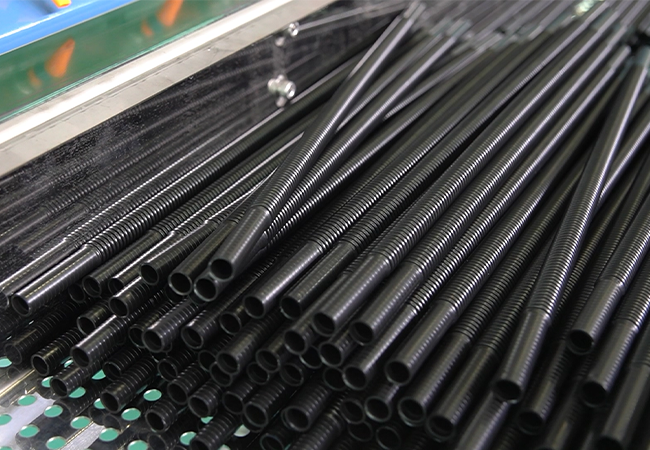
Building weight is a central consideration in green roof engineering. Every layer, including waterproofing protection, drainage components, growing medium, and vegetation, contributes to the roof’s total dead load. Drainage pipes must provide sufficient structural integrity without adding material that offers little practical benefit. Corrugated profiles help address this balance by increasing geometric stiffness through alternating ridges and valleys, allowing a pipe wall to resist deformation without relying solely on greater thickness.
The relationship between wall thickness and stiffness is not always straightforward. A thicker wall may improve resistance to crushing, but it also increases material consumption and pipe mass. A carefully designed corrugated profile can distribute loads more effectively, although its performance depends on polymer properties, ridge dimensions, and the pipe’s intended installation conditions. For green roofs, the design must account for pressure from overlying layers, localized loads around maintenance routes, and possible deformation during installation.
Manufacturing consistency matters just as much as the initial design. If the corrugation depth varies or the wall becomes uneven, sections of pipe may respond differently to pressure. A corrugated pipe making machine must maintain stable material flow, forming conditions, and cooling so that lightweight construction does not come at the expense of dimensional reliability. Quality checks should assess wall distribution and profile consistency rather than relying on nominal pipe diameter alone.
Perforation Design and Water Movement Across Green Roofs
Perforations allow excess water to enter the drainage pipe from the surrounding drainage layer. Their size, spacing, and arrangement influence how readily water enters the pipe and how effectively the system handles rainfall across the roof. A high perforation ratio can increase the available inlet area, but maximizing the number of openings without considering structural and hydraulic requirements may weaken the pipe wall or create uneven flow patterns.
Roof drainage design must consider the complete water pathway, not simply the pipe’s open area. Water first passes through the growing medium or drainage composite before reaching the pipe. Fine particles, root fragments, and sediment can gradually obstruct openings if the surrounding filter layer is poorly matched to the substrate. For this reason, perforation dimensions should be coordinated with geotextile selection, aggregate grading, and the expected maintenance regime. A pipe with many openings may still perform poorly if water cannot reach them freely.
Manufacturing equipment plays a direct role in producing consistent perforations and corrugated geometry. A suitable corrugated pipe extrusion machine must support the intended pipe profile while allowing perforation processes to maintain repeatable opening dimensions and spacing. Depending on the production setup, perforations may be formed inline or through a separate downstream operation. Inspection should verify that openings remain unobstructed and correctly positioned, while finished pipes are checked for deformation, irregular edges, and damage that could affect installation or drainage performance.
Green Roof Specifications Versus Standard Buried Drainage Pipe
Green roof drainage pipes and conventional buried drainage pipes share a basic purpose, but their design priorities differ. Underground systems often account for soil cover, traffic loading, trench conditions, groundwater exposure, and long-term external pressure. Green roof systems typically have less cover and a more restricted installation depth, while their pipes must fit within a layered assembly that includes waterproofing and root-management components. The relevant performance criteria consequently depend on the location and function of each drainage section.
Load requirements should reflect the actual roof configuration rather than simply adopting specifications intended for buried infrastructure. A roof with extensive growing medium, maintenance equipment, or regularly accessed walkways may experience different loads from a lightweight, inaccessible planting area. Drainage pipe selection should consider the pressure transmitted through the layers above it, the support provided by the surrounding material, and the consequences of deformation for water movement. Ring stiffness remains a useful reference where applicable, but its interpretation must match the installation conditions and relevant project standards.
Material choice and manufacturing capabilities also affect how specifications are translated into finished products. DEKUMA provides an automotive multi-layer corrugated tube extrusion production line developed for applications such as cooling circuits in new energy vehicles. The line supports the processing of materials including PA and PP/PE for automotive tubing, where stable extrusion and consistent multilayer construction are important. This application is distinct from green roof drainage pipe production, so equipment suitability for a specific roofing pipe must be assessed against the required polymer, diameter, perforation method, wall design, and applicable standards rather than assumed from automotive capabilities alone.
Conclusion
Reliable green roof drainage depends on a balance between water-entry capacity, structural stability, and the limited load allowance of the roof assembly. Lightweight corrugation can provide useful stiffness, while well-planned perforations support water collection when paired with appropriate filtration and maintenance provisions. Specification decisions should be based on the roof’s actual loading conditions and the full drainage-layer design, not copied directly from buried-pipe requirements.
Corrugated pipe making machines need to translate these design objectives into uniform geometry and reproducible openings, and corrugated pipe extrusion machines must be evaluated based on the material and production specifications for the intended pipe. With its experience in specialized extrusion equipment, DEKUMA offers a relevant manufacturing reference, although green roof applications require their own technical validation and product-specific testing.
