 Isaiminia World Breaking News & Top Stories
Key Takeaways
- Digital alarm data can reduce the need for repetitive phone-based information sharing between monitoring centers and emergency communications centers.
- Accurate addresses, alarm types, contact details, and site notes help telecommunicators begin with clearer information.
- Computer-aided dispatch systems can incorporate alarm information into an established dispatch workflow.
- Automation supports trained telecommunicators, but it does not replace local procedures or human judgment.
- Successful implementation depends on compatible technology, clean records, training, testing, and reliable backup plans.
When an alarm activates, the quality of the information attached to that event can affect every step that follows. Organizations that use complete monitoring solutions should view data accuracy as part of emergency readiness, not merely an administrative task. Keeping alarm records accurate and up to date helps reduce confusion and supports more informed decisions during critical situations.
Digital alarm communication can help move key details from a monitoring center into an emergency communications workflow with less manual repetition. It is not a substitute for calling 911 during an immediate emergency, and it does not guarantee a response time. Instead, it is a tool that helps authorized alarm information reach the people who make dispatch decisions. When implemented appropriately, this process can improve information consistency and help emergency personnel assess incoming alerts more effectively.
Why Alarm Data Matters During an Emergency
An alarm signal is more useful when it includes a verified street address, building or suite number, event type, contact information, and relevant site instructions. Consider a fire signal from a multi-floor property. A message that identifies the correct building, floor, and alarm area gives the receiving team a better starting point than a vague report that requires follow-up.
Good information also supports safer decisions after an incident is created. Access directions, gate codes managed through approved procedures, hazardous-material notes, and information about vulnerable occupants may all be important when they are current and appropriate for the responding agency to receive.
Where the Traditional Alarm Process Slows Down
In a traditional workflow, a monitoring professional calls an emergency communications center, verbally provides the alarm details, and the telecommunicator enters or confirms those details in a computer-aided dispatch system. This process remains important when clarification is needed, local policy requires voice confirmation, or a digital connection is unavailable.
- Addresses, unit numbers, and names may need to be repeated.
- Manual entry creates opportunities for transcription mistakes.
- High call volume can make it harder to handle routine alarm notifications promptly.
- Telecommunicators must balance alarm handling with calls that require direct public assistance.
How Digital Alarm Data Reaches 911 Centers
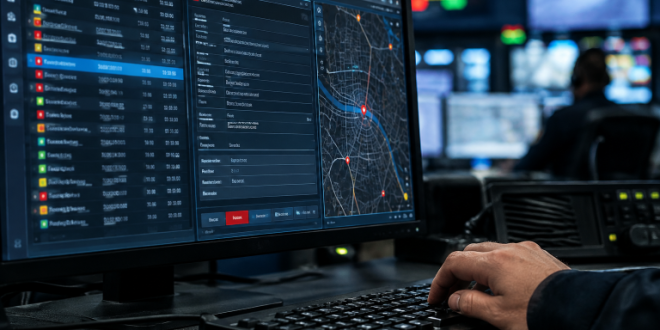
One approach is ASAP to PSAP, short for Automated Secure Alarm Protocol to Public Safety Answering Point. The digital delivery of critical alarm information into CAD systems is designed to standardize the exchange between participating alarm monitoring companies and emergency communications centers.
- A sensor, control panel, or connected device detects an event.
- The monitoring center receives and reviews the signal in accordance with its established procedures.
- Relevant event data is prepared for transfer.
- The participating emergency center receives the information in its dispatch environment.
- A telecommunicator reviews the incident and follows local policy.
- Responders receive dispatch information through the agency’s normal process.
What Dispatchers Gain From Better Data
Digital transfer can reduce repetitive data entry and preserve more of the original alarm details as they move between systems. That can help telecommunicators focus attention on reviewing the event, managing exceptions, and handling calls that require conversation, instruction, or rapid clarification.
The benefit is operational clarity, not hands-off dispatch. Each agency decides how alarm events are reviewed, prioritized, and sent to responders. Local protocols, available resources, and the details of the event still determine what happens next.
Why Accuracy Still Matters
Fast transmission has limited value when records are outdated. Property managers and security teams should routinely review the information associated with monitored locations, especially after construction, tenant turnover, staffing changes, or changes to site access.
- Street address, building, suite, apartment, and unit numbers
- Alarm zone names and device locations
- Authorized emergency contacts and phone numbers
- Access instructions and site-specific response notes
- Special risks, including hazardous materials or critical equipment
Why Human Review Remains Essential
Automation moves information, while people supply context and judgment. A telecommunicator may need to identify duplicate signals, request additional details, apply agency policy, or coordinate a response across jurisdictions. Digital systems should make that work easier, not remove the professional review that emergency communication requires.
Better data alone also cannot prevent every false alarm. Equipment maintenance, careful installation, user training, and up-to-date contact records remain essential to reducing avoidable dispatch activity.
What Communities Need Before Going Live
Implementation involves more than turning on a connection. Because emergency centers use different dispatch technologies, differences among CAD systems can complicate data sharing. Agencies and monitoring partners should plan, test, and document how the workflow will function in their specific environment.
- Compatible CAD and monitoring-system capabilities
- Secure data exchange and appropriate access controls
- Agreed event types, message fields, and address-matching practices
- Testing with dispatch staff before launch
- Documented fallback procedures for outages or incomplete messages
- Training and regular review of data quality and performance
What Property Owners and Security Teams Can Do
- Confirm every monitored address and unit identifier is complete.
- Update emergency contacts whenever roles, tenants, or phone numbers change.
- Keep alarm zones and site notes understandable to someone unfamiliar with the property.
- Ask the monitoring provider about the availability of digital alarm transfer in the local jurisdiction.
- Follow the testing and maintenance requirements in the monitoring agreement.
- Make sure authorized users know how to arm, disarm, and operate the system correctly.
- Understand the backup process if a digital transfer cannot be completed.
Common Questions About Digital Alarm Dispatch
Does digital alarm data replace 911 calls?
No. It may replace some routine voice communication between a monitoring center and a participating emergency communications center. Members of the public should still call 911 when they need immediate emergency assistance.
Does every 911 center support the same system?
No. Participation depends on local agency decisions, technology compatibility, funding, policies, and implementation status. Availability can vary between neighboring cities and counties.
What happens if the digital connection fails?
Participating organizations need tested fallback procedures. Depending on the applicable process, alarm information may be handled by phone or another approved method until normal connectivity returns.
Final Thoughts
Digital alarm communication can reduce routine friction between monitoring and dispatch workflows, but its value depends on the information behind each signal. Accurate records, compatible systems, trained telecommunicators, reliable monitoring practices, and clear local procedures all help support better emergency coordination.