Isaiminia World Breaking News & Top Stories
Short excerpt
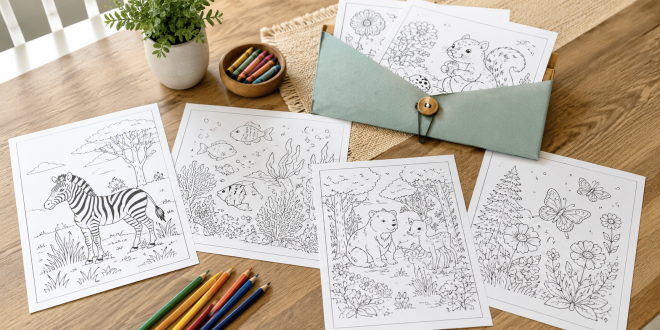
Create a themed coloring pack for kids in less than 10 minutes by choosing varied coloring pages, combining them into an organized file and preparing the right supplies. This practical guide helps parents, teachers and caregivers use coloring pages for rainy days, travel, classrooms, parties and quiet time.
How to Create a Screen-Free Coloring Pack for Kids in Less Than 10 Minutes
A rainy afternoon has changed the family plans. A long car journey is about to begin. Several students have finished their classroom work earlier than expected. In each situation, a few well-chosen coloring pages can provide a simple activity without requiring another screen.
The difficulty is rarely finding one coloring page. The time disappears when you start opening separate pages, comparing designs, downloading individual files and trying to remember where each file was saved.
A prepared coloring pack makes the process much easier. Instead of handing children one unrelated picture at a time, you can create a small themed collection with enough variety to hold their interest.
The pack does not need to be complicated. By choosing a purpose, selecting one flexible theme and combining several suitable coloring pages, you can have an organized activity ready to print in less than 10 minutes.
Decide how the coloring pages will be used
Before searching for coloring pages, think about when and where children will use them. This determines the number of pages, the level of detail and the coloring supplies you should prepare.
A small coloring pack can be useful for:
- Rainy-day activities at home
- Road trips and flights
- Restaurant visits
- Classroom early finishers
- Homeschool activity breaks
- Birthday-party coloring tables
- Holiday gatherings
- Quiet time before dinner
- Waiting rooms and appointments
For a short restaurant visit, three or four coloring pages may be enough. A long journey may require eight or ten pages, especially when more than one child will use the pack.
The setting matters too. Large, simple designs are easier to color on a clipboard in a moving car. More detailed coloring pages are better suited to a table where children have enough space for several pencils.
For a classroom or party, include multiple designs rather than printing the same picture for everyone. Children are more likely to begin the activity enthusiastically when they can choose the page that interests them.
Build the pack around one clear theme
A themed collection feels more engaging than a random stack of coloring pages. It also makes the selection process faster because every page should connect to the same broad subject.
Animals are an easy starting point. An animal coloring pack might include a zebra, elephant, lion, giraffe, monkey and parrot. The designs are connected, but each page still feels different.
Other flexible coloring-page themes include:
- Dinosaurs
- Ocean animals
- Space and planets
- Cars and construction vehicles
- Farm animals
- Flowers and nature
- Unicorns and fantasy creatures
- Weather and seasons
- Letters and numbers
- Christmas, Halloween or Easter
Choose a theme broad enough to provide variety. Six nearly identical dinosaur pictures may become repetitive, while a collection containing a T. rex, Triceratops, flying reptile, dinosaur egg and prehistoric landscape creates more opportunities for imagination.
Themed coloring pages can also complement classroom topics. Animal pages can accompany a discussion about habitats, while space coloring pages can introduce planets, rockets and astronauts.
The coloring activity does not need to become a formal lesson. A shared theme simply makes it easier for adults to ask questions and for children to invent stories about what they are coloring.
Include simple and detailed coloring pages
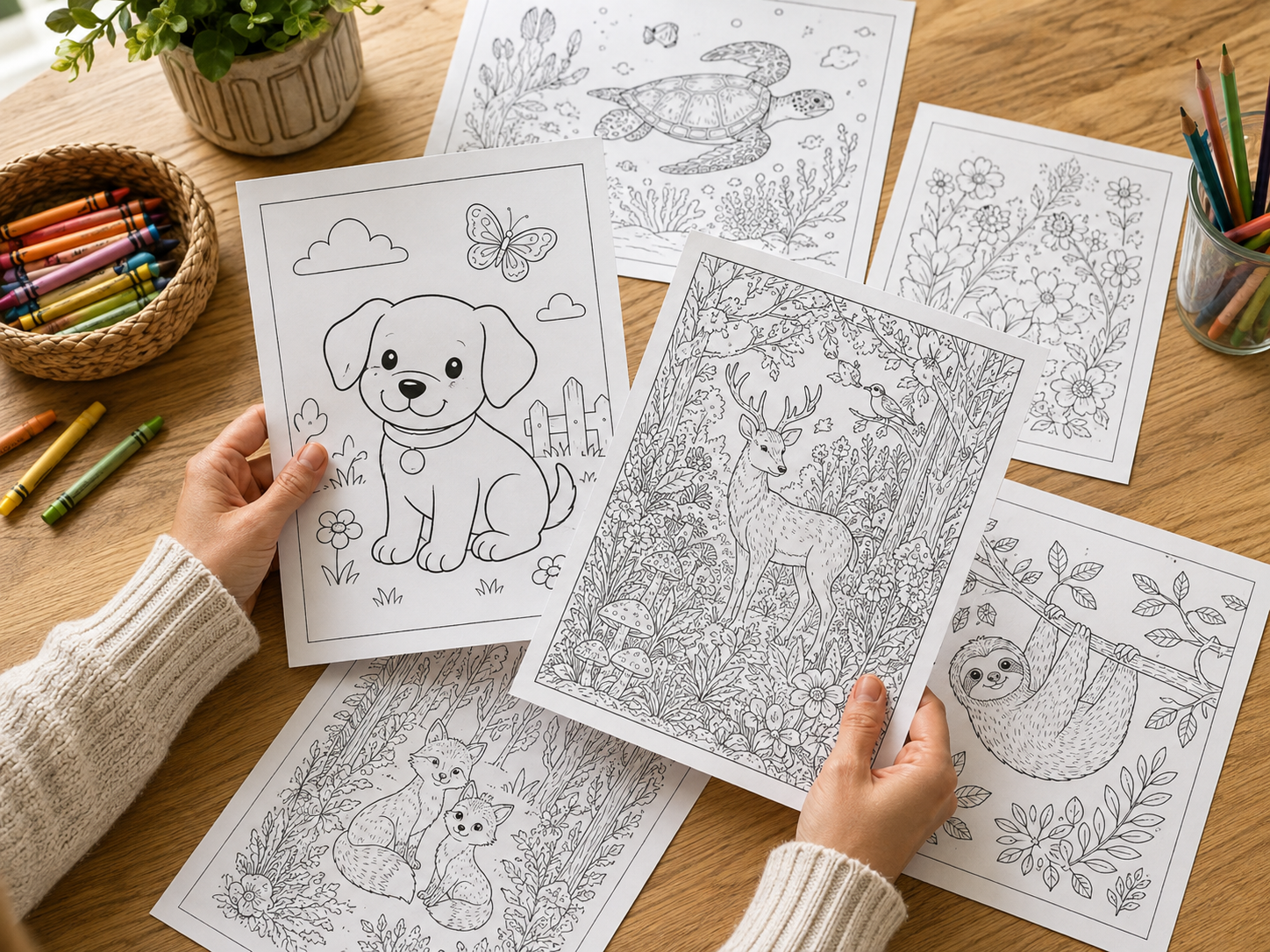
Children between the ages of 5 and 12 can have very different preferences and abilities. A useful coloring pack should therefore contain more than one level of detail.
For younger children, look for coloring pages with:
- Bold, easy-to-see outlines
- Large spaces to fill
- One main subject
- Limited background detail
- Recognizable objects or animals
Older children may prefer smaller sections, patterns, scenery and multiple objects. They may also enjoy pages that leave enough empty space for them to add a background or extend the original picture.
For a seven-page pack, you might choose two simple designs, three medium-detail pages and two more intricate pictures. This provides choice without making the collection feel overwhelming.
Age does not always determine preference. Some older children enjoy simple coloring pages because they find them relaxing. A younger child may choose a detailed picture and complete only part of it.
The aim is not to assign each child the “correct” page. It is to offer enough variety for children to choose something that feels inviting.
Choose the complete collection before downloading
Selecting and downloading coloring pages individually can create unnecessary work. You may end up with numerous open tabs and a download folder full of files with similar names.
A faster approach is to review the available designs first. Decide which pages belong in the final pack before downloading anything.
Check that the selection includes:
- Different subjects within the same theme
- More than one difficulty level
- Clear, printable outlines
- Enough variety for the number of children
- Designs appropriate for the intended setting
The ColoringZebra coloring pages library organizes free coloring pages into categories and allows users to select multiple pages for one combined PDF bundle. This helps parents and teachers avoid downloading and organizing every coloring page as a separate file.
For one child, five to eight coloring pages will usually provide enough choice. For a classroom, party or larger family group, choose more designs and print several copies of the most broadly appealing pages.
Avoid adding every attractive picture you find. A smaller, well-balanced pack is easier to browse and less likely to waste paper.
Arrange the coloring pages in a useful order
The order of the pages can make the collection feel more intentional.
Place a simple and inviting coloring page at the front. This gives children an easy place to begin. More detailed designs can follow for those who want to continue coloring for longer.
For an educational theme, arrange the pages in a logical sequence. A space pack could begin with the sun and planets, continue with rockets and astronauts, and finish with an open-ended alien landscape.
You can also place a blank sheet at the back of the pack. Children can use it to draw another picture connected to the theme.
A simple cover page is optional. For a birthday party or classroom activity, write the theme at the top and leave space for the child’s name. There is no need to spend time designing an elaborate cover—the coloring pages should remain the focus.
Add one coloring challenge
A small challenge can make familiar coloring pages feel fresh without turning the activity into a complicated craft project.
Try one of these ideas:
- Use only three colors.
- Add a complete background to the picture.
- Create a pattern inside the largest sections.
- Color the same page using warm or cool colors.
- Draw three additional objects around the main subject.
- Give the character or animal a name.
- Add a speech bubble to the picture.
- Draw what happens next in the scene.
For a group activity, give several children the same coloring page but different color challenges. One child might use realistic colors, another might use only bright colors, and another could create patterns instead of solid sections.
The finished pictures will look very different even though everyone started with the same design. This can encourage children to see coloring pages as starting points for creativity rather than pictures with one correct result.
For older children, introduce simple shading. Ask them to press lightly in some areas and more firmly in others, or to blend two related pencil colors.
One challenge is enough. Too many instructions can make a quiet coloring activity feel like another assignment.
Check the coloring pages before printing
Open the print-preview window before printing the entire pack. Confirm that each coloring page is centered and that no outlines are being cut off near the margins.
Most home printers use A4 or US Letter paper. When the document and paper sizes differ, select “Fit to page” or “Fit to printable area.” Check the preview rather than assuming the printer will scale the page correctly.
Print one test page when preparing multiple copies for a classroom or party. Look for:
- Sharp, visible outlines
- Correct page orientation
- Uncropped edges
- Suitable image size
- Enough detail for the chosen age group
Standard printer paper is usually sufficient for crayons and colored pencils. Slightly thicker paper is more suitable for markers because it reduces the risk of color bleeding through.
Draft-quality printing may work well for coloring pages with thick outlines and large sections. Use normal or high-quality mode for more detailed pictures with thin lines.
Black-and-white or grayscale printing is generally the most practical option. The child supplies the color, so there is rarely a reason to use expensive color ink.
Prepare a simple coloring kit
The pages are only part of the activity. Having the supplies ready prevents children from losing interest while adults search for pencils or sharpen crayons.
Crayons work well for younger children and simple coloring pages. Colored pencils are better for detailed designs and are usually convenient for travel.
Washable markers create bright results but require suitable paper and a protected surface. They may not be the best option in a car, restaurant or waiting room.
A basic coloring kit could contain:
- A small selection of crayons or pencils
- A sharpener that stores its shavings
- A clipboard or firm folder
- The printed coloring-page pack
- A reusable envelope for finished pages
There is no need to provide dozens of colors. A manageable selection keeps the activity organized, particularly when children are working in a small space.
For a classroom coloring station, sort pencils by color family or keep small sets in separate containers. This makes it easier for several students to share the supplies.
Reuse completed coloring pages
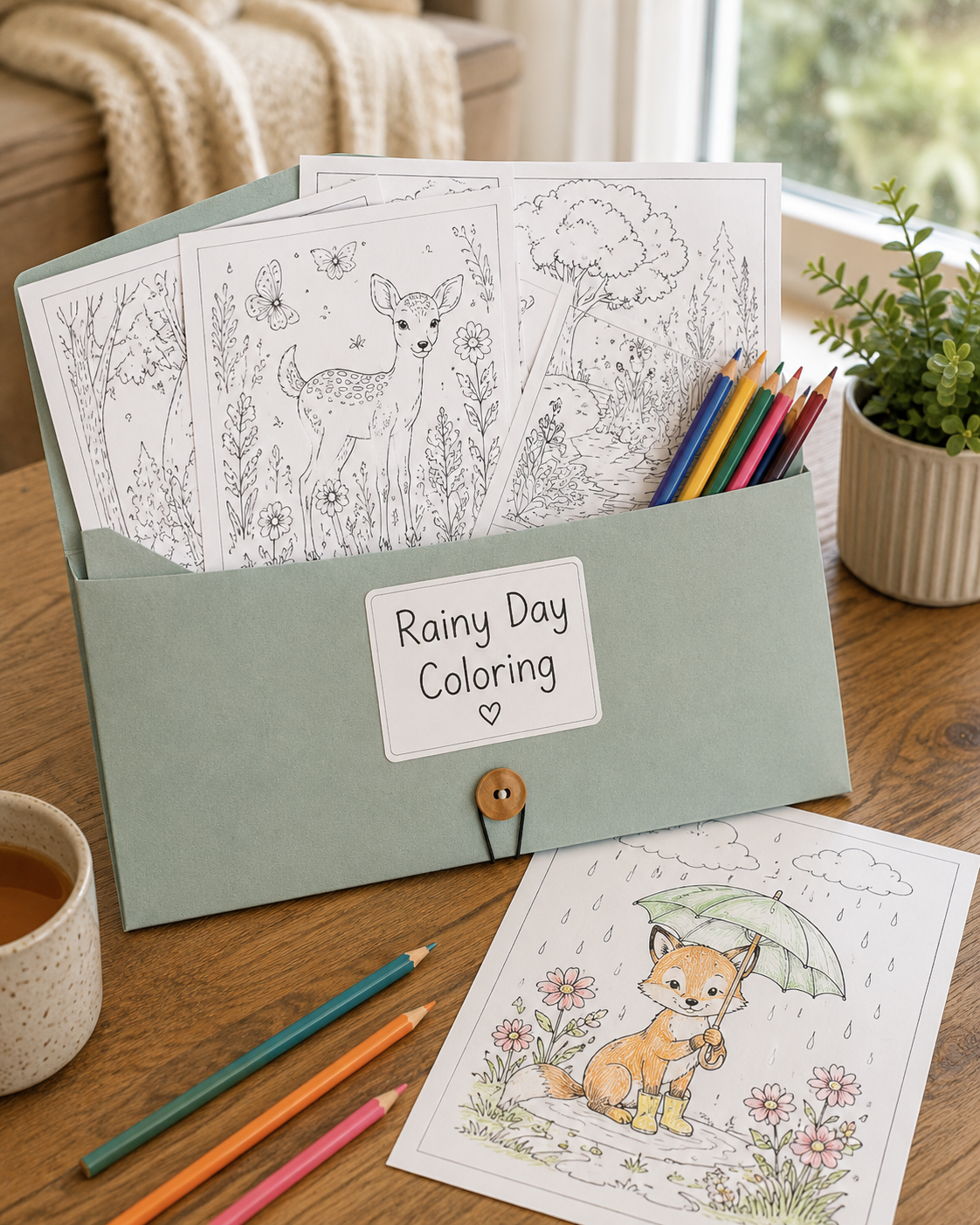
Finished coloring pages can become part of another simple project rather than being discarded immediately.
Children can turn them into:
- Homemade greeting cards
- Notebook covers
- Bookmarks
- Gift decorations
- Classroom displays
- Story prompts
- Wall art
- Personal art portfolios
Several pages from the same theme can be combined into a larger display. Animal coloring pages could become a classroom zoo, while ocean pages could form an underwater scene across a noticeboard.
Children can also arrange completed pages into their own picture book. Ask them to decide what order the pages should appear in and invent a story connecting the characters or scenes.
When cutting is appropriate for the child’s age, individual colored subjects can be cut out and added to a collage. Adult supervision may be needed.
Reusing the pages gives children a reason to complete their pictures and makes the original coloring activity last longer.
Keep coloring time easy
A successful coloring pack does not need elaborate instructions, expensive supplies or hours of preparation. One clear theme, several carefully chosen coloring pages and a small set of crayons or pencils can be enough.
Choose the complete collection before downloading, include different levels of detail and check one page before printing the full pack. Save the finished file so that the work does not need to be repeated later.
With a little organization, coloring pages can become a dependable screen-free activity for rainy afternoons, journeys, classroom transitions, parties and quiet moments at home.