Isaiminia World Breaking News & Top Stories
Key Takeaways
- Assess your fitness goals and available space to create a personalized workout area.
- Select equipment that suits your exercise preferences and fits within your designated space.
- Incorporate design elements that enhance motivation and comfort.
- Ensure proper lighting, ventilation, and safety measures for an effective workout environment.
Creating a home gym tailored to your personal fitness journey can transform not only your exercise routine but also your perspective on wellness. With the right strategy, you can bypass commute times, increase workout consistency, and build a unique space that reflects your ambitions. Whether you’re seeking high performance or simply a dedicated spot to stay active, a thoughtful layout and equipment selection will provide accessibility and motivation for any level of fitness. For those needing extra guidance, a home gym designer can streamline the process, ensuring the finished gym is cohesive and functional.
Your home gym is more than a workout area. It is an investment in long-term health and happiness. Envisioning the right blend of function and inspiration will ensure each workout is both effective and enjoyable, while still fitting your household’s unique needs. Planning ahead also helps prevent unnecessary spending or clutter. By focusing on your main objectives and the design features that energize you, your gym will quickly become a preferred space in your home.
Assess Your Fitness Goals and Space
Start by defining what you want to accomplish with your home gym. Are you aiming to lose weight, build muscle, boost cardiovascular health, or simply stay active? Knowing your core objectives determines not only the type of equipment you’ll need but also the kind of space that will inspire regular use. Even a compact room, an underutilized basement, or a converted garage can serve as the foundation for an efficient fitness zone. Take measurements and consider ceiling height, available outlets, and nearby windows to identify your true options before purchasing any equipment.
Choose the Right Equipment
Once goals and space have been established, select the essential tools to bring your workouts to life. For those focused on strength training, adjustable dumbbells, resistance bands, kettlebells, or a fold-away bench can save space and provide versatile options. If you prefer cardio, invest in compact, foldable machines like treadmills, rowing machines, or stationary bikes. Always prioritize quality over quantity and check product reviews to ensure the equipment is durable and suitable for your fitness level. Minimalism is particularly effective for home gyms, as it prevents clutter while encouraging frequent use.
Design for Motivation and Comfort
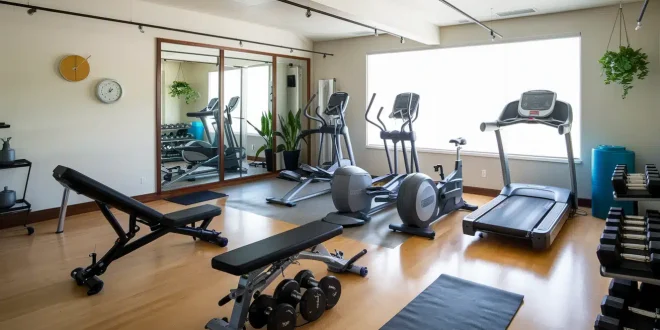
The atmosphere of your home gym can influence your willpower and routine consistency. Bright, energizing colors, motivational posters, and a playlist-ready speaker can help create a space that keeps you coming back. Installing mirrors is useful for monitoring form, while personalized touches such as framed milestones or inspiring quotes add a sense of achievement. Comfortable, shock-absorbent flooring, such as rubber mats or high-density foam tiles, reduces joint stress, protects your home’s foundation, and reduces the likelihood that dropped equipment will cause damage.
Lighting and Ventilation
A bright, airy environment feels much more inviting than a dark, stuffy one. If possible, arrange your gym in a room with natural sunlight to improve mood and alertness. Otherwise, opt for reliable overhead lighting, and include lamps or LED strips to highlight key areas. Proper airflow helps keep your workouts comfortable and healthy; a portable fan, an air purifier, or open windows can make a significant difference. Proper ventilation can reduce dust and bacterial buildup, which is crucial in fitness spaces that are used daily.
Safety Considerations
Each home gym setup should prioritize safety. All equipment must be assembled strictly according to the manufacturer’s guidelines and regularly inspected for wear or malfunctions. Clearly define pathways to keep the space free of clutter, allowing for safe transitions between moves and exercises. Install non-slip flooring and keep a basic first aid kit nearby. These steps help you avoid common injuries and ensure peace of mind while training at home.
Budgeting and Cost-Effective Solutions
It’s possible to build a home gym on nearly any budget. Begin with core essentials and upgrade or expand as your commitment and skill level increase. Local classifieds, online marketplaces, and fitness store sales often provide gently used or discounted equipment. Remember that bodyweight routines are highly effective for strength and flexibility, so a minimalist approach featuring a yoga mat, resistance bands, and a pull-up bar can go a long way for those with limited funds.
Maintaining Your Home Gym
Cleanliness and upkeep extend the life of your investment and keep your workouts safer and more enjoyable. Wipe down machines, mats, and weights after each use to eliminate sweat and germs. Frequently inspect equipment for fraying straps, loose bolts, or cracking cushions, and replace them promptly. Establishing a routine maintenance schedule ensures your gym remains as inviting and functional as the day it was created.
Conclusion
Designing a home gym tailored to your life promotes consistency, motivation, and overall health. By carefully assessing your goals, selecting quality equipment, and crafting a stimulating environment, you can create a personal fitness sanctuary that supports every step of your wellness journey. With planning, your home gym will help you achieve lasting results and a stronger, healthier you.