 Isaiminia World Breaking News & Top Stories
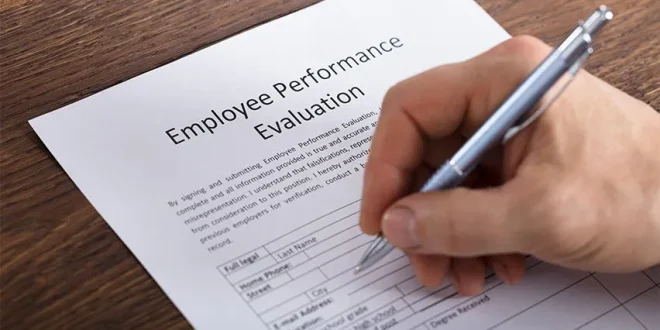
Evaluating employees is one of the most critical responsibilities of any organization. Done well, it leads to stronger performance, clearer development paths, and a more engaged workforce. Done poorly, it can cause confusion, erode trust, and stall progress. Modern employee evaluation is not about micromanagement or outdated rating scales—it’s about aligning expectations, providing meaningful feedback, and making performance conversations a tool for growth and accountability. To be effective, the evaluation process must be structured, fair, and responsive to both individual and organizational needs. A well-designed motivation platform can further support this by reinforcing positive behaviors, recognizing achievements, and encouraging continuous improvement.
Establish Clear and Measurable Criteria
An effective evaluation begins long before the formal review process. It starts with defining clear performance expectations that are directly tied to an employee’s role, responsibilities, and business outcomes. Job descriptions should be living documents—adapted as responsibilities shift—so that there’s no ambiguity about what success looks like.
Criteria should be both quantitative and qualitative. While key performance indicators (KPIs) and metrics offer objectivity, many critical contributions can’t be captured in numbers alone. Skills like communication, problem-solving, leadership, and collaboration are essential and must be assessed through observation, feedback, and context.
Goals must also be relevant and realistic. If targets are misaligned with the available resources or lack strategic clarity, they won’t motivate or measure performance effectively. Managers should collaborate with employees during goal-setting, ensuring that individual objectives ladder up to team and organizational priorities. This alignment helps maintain motivation and provides a framework for meaningful evaluation.
Incorporate Regular, Two-Way Feedback
Annual reviews alone are no longer sufficient for managing performance. Today’s workforce expects regular feedback—real-time, constructive, and actionable. Ongoing check-ins help ensure that employees aren’t caught off guard at review time, and that adjustments can be made throughout the year to keep performance on track.
These conversations should be two-way. Employees must have the opportunity to reflect on their own performance, ask for support, and provide feedback on how their roles and resources could be improved. When evaluation is treated as a dialogue, it becomes less about judgment and more about growth.
Managers need to be equipped with the skills to give feedback that is specific, respectful, and focused on outcomes. Generic praise or criticism doesn’t support improvement. Constructive feedback, delivered in a way that highlights behaviors and consequences, builds trust and drives progress.
Evaluate in the Context of Teams
No employee operates in a vacuum. Evaluating performance must also consider the context of team dynamics, collaboration, and shared outcomes. Teams that work well together can amplify individual performance; those with unresolved conflict or unclear roles can hinder even the most capable contributors.
Managers should observe how employees contribute to team goals, communicate with peers, and support collective efforts. Input from colleagues, cross-functional partners, and even clients can provide valuable insight into how someone performs in a team environment.
This is also central to building resilient teams. Evaluations that emphasize not just individual excellence but also collaborative effectiveness reinforce the importance of shared responsibility. When people are recognized for how they help others succeed, they’re more likely to invest in team health and mutual accountability.
Understand Why Performance Management Is Important
Beyond individual reviews, effective evaluation supports a broader performance management strategy. Why is performance management important? Because it aligns employee actions with company goals, ensures consistency across teams, and builds a culture of accountability. It helps identify high performers, address challenges early, and make informed decisions about promotions, compensation, and succession.
More importantly, performance management enables organizations to adapt. In a fast-changing business environment, companies need visibility into what’s working and what’s not. Evaluations, when thoughtfully designed, provide that insight—not just for individuals, but for teams, departments, and the company as a whole.
A well-executed evaluation process empowers employees, strengthens leadership, and supports continuous improvement. It requires time, skill, and commitment—but the return is a workforce that is engaged, aligned, and capable of driving sustained success.